The Nature of Consciousness: Energy, Matter, and Awareness
Summary: What is the fundamental nature of consciousness? is it matter, energy, or something beyond physical categorization? This inquiry explores consciousness as an organic phenomenon arising from brain and body processes, examining how it creates the subjective experience of awareness and being. By investigating consciousness as a field or projection that manifests during waking states and withdraws during rest, the essay illuminates how this intangible yet undeniable aspect of existence relates to life itself, functioning as both an information system and the very medium through which we experience reality.
Topic: How consciousness arises in natural states, what purposes it serves, and how it is different from intelligence and awareness.
Working definitions
- At the outset, let us define the four important terms used in this discussion
- Consciousness is the overall subjective field of experience that arises when the brain and body are active.
- Awareness is what appears within that field (sensations, perceptions, thoughts, and feelings). (In some cases, awareness can also turn back upon itself, allowing one to notice that one is aware.)
- Self refers to the organizing sense of “me” (a self-model) around which experience is integrated.
- Intelligence is the set of cognitive abilities that interpret information and guide reasoning, choice, and action. Philosophically, intelligence is responsible for discerning wisdom or the ability to distinguish one thing from another.
The Nature of Consciousness
What is the nature of consciousness? Of what is it made? Is it made up of subtle matter or subatomic particles or particles that are even smaller than them and which have not yet been discovered? Is it some form of energy or energy field? Can it be extracted and stored just as any matter or energy, and can it exist by itself outside the brain with or without any physical support?
These are difficult questions for which we have no definite answers. Consciousness may be a form of matter or energy since everything in the universe is made up of matter or some form of energy. Consciousness, which is a part of our bodies, cannot be an exception. However, certainly, the brain is not consciousness. It is an organ that, along with other organs in the body, creates and supports consciousness and its functions.
From this perspective, consciousness is an organic phenomenon or field of energy that arises from the brain and the body and gives rise to the sense of being and awareness. It becomes withdrawn, fully or partially, when the brain and the body go into a restful mode, and it ceases to exist when the body dies or the brain dies, as seems evident in cases of severe brain damage or profound loss of memory. Thus, life and consciousness are similar in several respects. Hence, in Hinduism, liveliness and awareness are represented by a common term, chetana or chaitanyam. Just as life manifests in the body but is intangible, consciousness too is intangible and physically ungraspable.
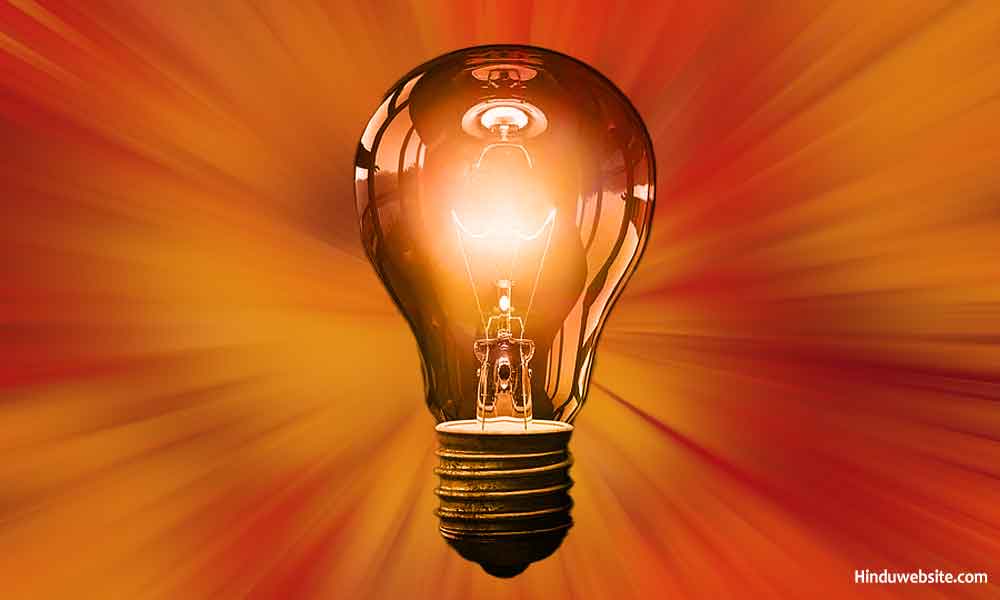
In this regard, one can use the analogy of a bulb. A bulb is made up of certain parts. By itself, it is just an inert object, made up of different parts. However, when it is connected to an electric source, it emits light in all directions. We may compare the bulb to the brain, the bulb holder to the body, the electric wire to the nerves, the socket to the brain stem, and the plug to the spinal cord, and the light which is radiated by it to consciousness.
By itself, the brain is just an organ, made up of biological matter. If you dissect the brain, you will find no trace of consciousness in it. However, a field of consciousness arises from it when it is actively engaged in certain actions such as knowing, remembering, learning, thinking, and so on. We still do not know how the brain induces consciousness to perform those functions.
Other views are also possible and worth keeping in mind. Some may regard consciousness as nothing more than brain activity, while others may see it as something fundamental that the brain only channels or expresses. Still others may interpret it through spiritual or religious ideas. I am not attempting here to settle those debates. I only wish to suggest, from a common sense and personal point of view, that consciousness seems closely tied to the living brain and body, even if its ultimate nature remains uncertain.
Materialism, in particular, would say that consciousness is not a separate substance or energy but simply a product of physical processes in the brain. According to this view, thoughts, feelings, selfhood, and awareness are all outcomes of neural activity, however complex and difficult they may be to explain. I do not fully adopt that position here, but it is an important perspective because it insists that consciousness should be understood in relation to the physical body rather than apart from it. Even if we accept this view, it does not contradict the opinions held by many schools of Hindu philosophy, which hold that the consciousness of the mind belongs to the body, or the field of Prakriti, and is essentially different from the pure consciousness of the Self.
At the most basic level, consciousness is a function of the brain. In its fundamental aspects, it is a combination of several types of awareness, tethered to the concept of self. It is the state of being conscious or being aware of itself, its surroundings, and its relationship and interaction with the world and with the things and the environment with which it interacts. Many faculties of the brain facilitate it and sustain it. In the natural conditions, it seems to arise due to a memory-based information system in which not only the brain but the entire body also plays a significant role. Consciousness arises from the information that is stored in the brain by the activities of the body and the various organs in it.
Thus, consciousness is a state of dynamic awareness that is created and sustained by bits and pieces of information that the body gathers in response to the environment in which it lives. It primarily facilitates self-awareness, survival, and self-preservation by creating an inner world that mirrors the outer world and helps the individual make sense of it.
Consciousness, intelligence, and awareness
It is difficult to draw a clear line between consciousness and intelligence. Consciousness itself may be a form of intelligent awareness, and intelligence itself may be a form of conscious awareness. They complement each other and facilitate the executive functions of the brain. Human intelligence is useful and very advanced. However, it is neither perfect nor efficient and is prone to cognitive distortions, delusions, confusion, and logical fallacies.
Consciousness refers to the state of awareness or of being conscious of things and of oneself, built around a sense of self. Intelligence is the ability to make sense of the information that is present in consciousness, the brain, or the environment and to use it for intended ends through reasoning, analysis, observation, inference, interpretation, imagination, and pattern identification.
While consciousness facilitates self-awareness, intelligence facilitates self-preservation through problem solving and appropriate survival strategies and self-defensive mechanisms which it creates in response to the patterns, anomalies, threats, and opportunities it discerns in the environment.
Consciousness by itself is not very useful unless it is assisted by intelligence to filter, analyze, and interpret the information which the body gathers in its interaction with the external world and use it effectively and efficiently for self-preservation or desired ends. This aspect of consciousness or conscious behavior is guided either by intelligence or instinct or both.
When awareness, which arises in consciousness, is shaped by the executive functions of the brain, it becomes intelligent awareness. When it is shaped mainly by the instinctual or primitive functions of the brain, it becomes instinctual or mechanical awareness. The former is most fully developed in humans, while the latter is found in many animals.
To conclude, consciousness appears to me to be a living, dynamic condition that arises from the close interaction of the brain, the body, memory, and the sense of self. Awareness fills that field with experience, while intelligence helps interpret and use what appears within it. This may not answer every question about consciousness, but it offers a practical way of thinking about it in relation to ordinary life and human experience.