Ten Signs That a Guru May be a Fraud or a Fake
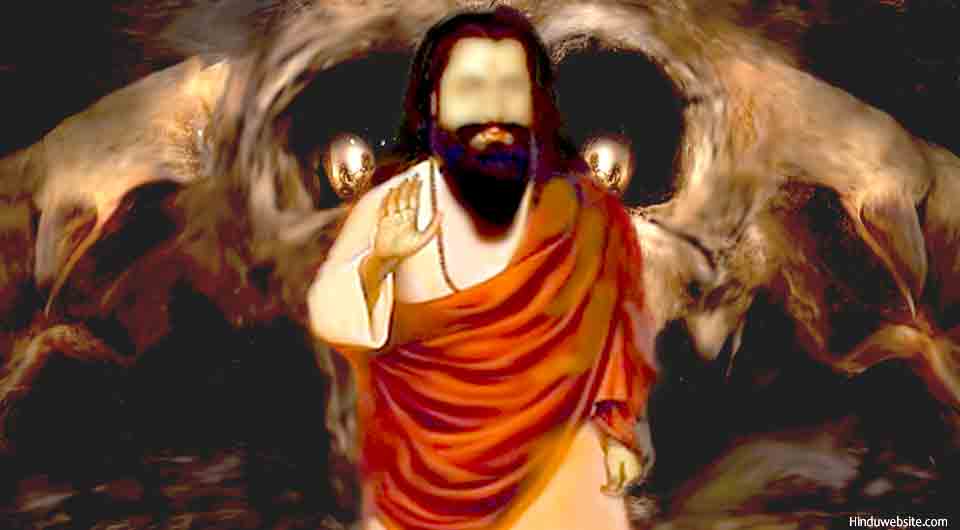
Fake Gurus pose a major problem in contemporary Hinduism
Summary: This essay lists ten important characteristics or signs of a fake spiritual guru people should be aware of.
Disclaimer: The information in this essay is meant for educational purposes only. The characterization and the image of the person portrayed as a guru in this work are fictitious. Any resemblance to real persons, living or dead, is purely coincidental. No identification with any actual person's (living or deceased) qualities, actions, or behavior is intended or should be inferred.
In Hinduism, a spiritual guru enjoys more respect than even parents because he not only gives his disciples a spiritual rebirth but also leads them on the path of liberation. Hence, he is considered God in human form, and at times even ritually worshipped. Unfortunately, this sentiment is often exploited by fake gurus who assume the role of a spiritual master without necessary qualifications and engage in misdeeds.
When scandals break out about their scams and crimes, it breaks the hearts and souls of millions of their followers who look upon them as God and savior. It is difficult to distinguish a fake guru from a real one. How to discern a fake guru? Worldly people cannot perceive truths easily because they lack discernment with their minds and are crowded with desires and passions. They see the world through the filter of their minds and therefore, see what they want to see and hear what they want to hear. Their worlds are created by their illusions, expectations, and limited experience. To see things as they are and understand the truths hidden within oneself or others, one must require intelligence (buddhi), which gives us the power to know the right from the wrong and distinguish truth from falsehood. When you apply intelligence and look at today’s gurus, sometimes you may discern inconsistency in their behavior and attitude or a clear incongruity between their words and actions. If you do, then you must be careful how much you commit your life and energies to them. In this, your guide is your intelligence. The following are a few important signs that a guru may be fake, or not as sincere as we may think him to be.
1. The guru’s past is unclear, vague, and mysterious
Biographical accounts of a guru’s past before he became famous may offer some clues. Often, fake gurus and their gullible followers embellish their histories with miraculous events, as if an extraordinary spiritual mindset and supernatural powers are innate from birth. Contradictions, hyperboles, and misinformation make it hard to determine whether such gurus are truly enlightened or just pretending. Nowadays, it's common to hear about scandals, controversies surrounding the actions of some popular gurus, and they and their followers claiming fake educational credentials or hiding issues with their marriages before they took sannyasa.

2. He does not truly practice renunciation
If a guru renounced worldly life before becoming a guru, he must exemplify the practice of renunciation. He should live a simple, austere, and authentic life both privately and publicly. In Hinduism, a person gives up his past, family, name, caste identity, and former associations before entering the ascetic path. This is a crucial area where the guru may betray his true behavior. If the guru’s family still surrounds him, manages his daily schedules, meetings, appointments, donations from followers, and so on, this indicates that the guru does not practice true renunciation or that he is still driven by desires and attachments. Sometimes, you may also notice that, besides wielding power and influence over the guru and controlling members of his inner circle, some family members or past associates enjoy his trust and confidence and live in luxury, while ordinary followers do the chores and lead difficult, insignificant lives.
3. He prefers the company of rich and powerful people
One of the most essential qualities of truly enlightened masters is their ability to overcome dualities, attraction, and aversion, and practice uniformity, remaining the same in all circumstances and treating everyone equally. Ideally, they should treat gold or a lump of clay with the same regard. Sameness and equanimity (samsiddhi) are the marks of genuine renunciation. Only such individuals are qualified to be authentic gurus. Because they transcend selfishness and egoism, they embody the Supreme Lord of creation, who is equal to all and does not discriminate. In an ideal world, gurus can grant rewards and punishments to their followers to aid their spiritual growth. However, in doing so, they must adhere to principles rather than personal biases, treating individuals based on their purity and spirituality rather than caste, social status, nationality, wealth, power, or position. If you observe that a guru does not treat his followers equally but differentiates them based on worldly criteria, that should serve as a warning. If privileged individuals gain free access and spend quality time with him privately, while others wait outside and are content observing him from afar, you should question whether he is the right guide for you.

4. His actions betray his ethical and spiritual conduct
The guru tradition draws a clear distinction between spiritual gurus and worldly teachers. The former teach freely without expectations, while the latter teach in exchange for a fee or service. Spiritual gurus are primarily renunciants. If they return to the world after enlightenment, it is solely to help others find their way and achieve the highest goal. Otherwise, they should retire from public view and live in seclusion. Gurus are not supposed to seek media attention, entertain celebrities and entertainers to gain publicity, act like social media influencers, or allow their followers to glorify them or spread false stories. Gurus who promote virtuous conduct and ethical living must set an example. By doing so, enlightened ones inspire others to purify themselves and progress on the spiritual path. If you notice that a guru’s personal behavior contradicts his true nature as a materialistic person and that he does not practice virtues like contentment, indifference, selflessness, and so on, you should understand that the guru is not trustworthy. He has not transcended the impurities of ego, desires, and attachments, nor does he embody divine virtues. He is not worth your time.
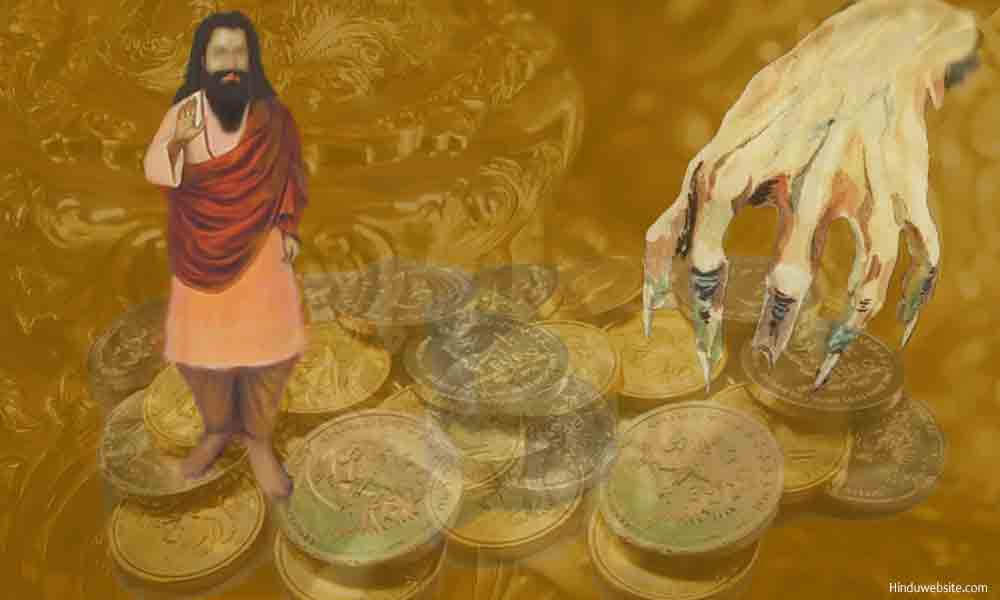
5. He exploits his disciples to promote his goals
Truly enlightened masters teach independence and encourage their disciples to engage their knowledge, intelligence, and energies for righteous purposes on the path of karma yoga. They energize them with their thoughts, words, and blessings and encourage them to promote Dharma by serving others selflessly. False gurus use their followers for selfish ends. You must feel concerned if you see a guru who makes a clever use of his followers’ knowledge, talents, and skills to promote himself, his programs, or his agenda. In doing so, they offer them little in return, except the satisfaction that they are working for a noble cause. Such gurus are nothing but energy vultures. They suck your energy, vitality, time, wealth, and leave you empty and desolate. People who are otherwise successful end up with these gurus, donating to their institutions their life savings, doing menial tasks, and living in their shelter. Avoid such gurus, if you want to have peace mind and provide for your retirement.

6. He is motivated by name and fame, power and influence
Our scriptures teach that enlightened masters transcend dualities and desires, remaining indifferent to fame and infamy. When they face criticism or false accusations, they do not defend themselves or incite their followers to defend them with counterarguments and accusations. Instead, they exemplify stoicism, viewing such incidents as the play of their karma or fate and an opportunity to withdraw into themselves and let the world move on. If you encounter a guru who is overly obsessed with his public image, spends a lot of time enhancing his appearance or impressing others with his knowledge, invests in public relations and media publicity to promote himself, or increase his following or search ranking, be cautious not to fall into his trap. He is clearly more interested in self-promotion than in the spiritual well-being of his followers.
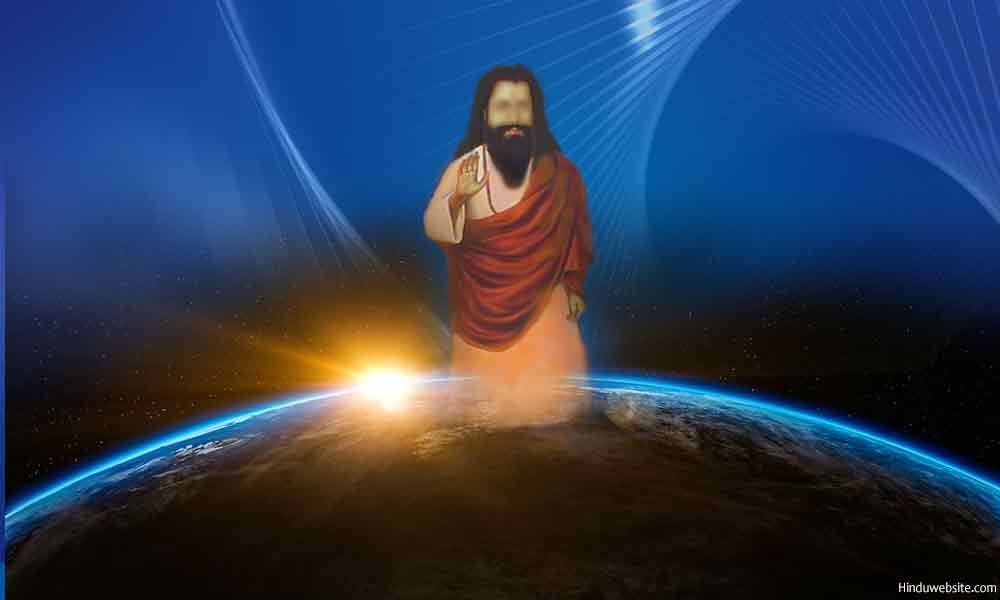
7. He is not free from pride, anger, egoism and envy
Gurus are not supposed to entertain any passions, least of all the evil passions, such as anger, envy, greed, lust, pride, etc. They signify that a person is still impure and has not attained the level of perfection to qualify for liberation. When you want to follow a guru, you must examine whether he is mentally stable and calm or suffers from frequent bouts of anger and depression. If he is unhappy with competition, intolerant towards those who disagree with him, and jealous of the popularity of other gurus, you must avoid him by all means. Such fake gurus, while they preach tolerance and compassion, do not easily forgive or forget those who leave their flock or move on with their lives. They do not like them to be independent and free-spirited. Followers who dare to oppose them, question them, or criticize them in public face their wrath, as they are trolled, ridiculed, ostracized, threatened, or humiliated by their loyal and trusted disciples with their approval. They may even resort to legal measures to intimidate his critics.
8. He advocates celibacy but does not practice it
It has been a long tradition in Hinduism that ascetics and spiritual practitioners must practice celibacy to gain control over their minds and bodies and transform their lower energies or shaktis so that they may cultivate divine qualities and become self-illumined. Of the five restraints they must practice, celibacy is the most important and the most difficult, which exposes them to an intense inner churning, bringing out all their dormant desires and past life impressions. There was a time when ascetic people were not even allowed to look at the opposite sex or approach them. Nowadays, it is common for gurus to mingle freely with men and women in public and private, which can sometimes lead to scandalous situations. One warning sign that things are not clear-cut is when you see a guru surrounding himself with a number of good-looking women, or when you see them living nearer to his private quarters, with free access to him at all times. Also, if you find that some female disciples have special influence over him or free access to reach him and look after his personal needs, that is another warning bell you must heed.
9. He exploits spiritual beliefs for material gains
It is not difficult to distinguish between a true ascetic and a worldly person. However, things are not crystal clear if a worldly person camouflages his true intentions behind a cloak of spirituality and pretends to be a truly spiritual person. Still, if you are careful, you discern some inconsistencies that betray his true nature. A truly spiritual person draws a clear distinction between spiritual and worldly matters and stays away from the latter to the extent possible. Some of them do not even like to touch money or any luxury item, as they believe it will pollute their thinking or their minds and bodies. Ideally, they should leave all business matters to their trusted followers and focus solely on spiritual matters. However, it is not the case with some of the gurus nowadays. Some of them take excessive interest in running their organizations like business enterprises with a profit motive, using every available opportunity to market various products or services for a premium. While you hear them saying that they do it for charitable causes, you cannot be certain that their motives are purely altruistic. They should not be trusted, even if they enjoy great popularity or their followers treat them like gods on earth. You will gain nothing much from such relationships.
10. He is attached to his name and form and identity
Attachment to name and form in any manner is a sign of delusion and ignorance. One of the first lessons we learn about spirituality is that name and form (namarupa) or the mind and body constitute the false self or the not-self, and to attain purity and liberation, one must cultivate mental distance and remain detached from them. A true renunciant does not care how they look in public. Some even try to appear wild or crazy to avoid public contact. It is not the case with fake gurus. Because of their impurities, such as egoism and delusion, they find it nearly impossible to ignore their self-importance or their attachment to their names and forms. They not only care about how they appear in public or how people perceive them, but also spend considerable time in private on their personal care, clothes, hairstyle, and even makeup. They do this to convince the world that they radiate God’s perfection and represent perfect sainthood and that they can be trusted for guidance. If you find gurus with these dubious tendencies, you must avoid them, irrespective of what their followers and sycophants say.
Conclusion
These are just a few likely signs that a spiritual guru might be untrustworthy and lack integrity and transparency. If any guru is seen with such dubious tendencies, it is still not conclusive that they may be fake. Some gurus may still act this way to test their followers or keep them guessing about them. However, the false gurus cannot help but betray their true nature since they are internally flawed, impure, and imperfect. The relationship between a guru and his disciples is a purely personal one. We have no intention of prying into that, disturbing them, or judging them. Our aim here is to stay away from false gurus and their tricks so that we are not drawn unnecessarily into a vortex of falsehoods and appearances and forced to serve someone who does not deserve our wealth, time, or energy. We must look at the signs or the symptoms they betray and stay away from them. Nothing is certain in this world. Human character is more complex than we imagine and cannot easily be categorized. Some gurus may not entirely be fake, but possess negative characteristics or weaknesses because of their past karma, which may betray their weaknesses and cast doubts on their ability to guide others. The truth must be found out through careful examination and by looking for additional information. If you practice spirituality and cultivate discernment, you will intuitively know how to spot a true guru and avoid the false ones.
Copyright: This article is copyright Hinduwebsite.com and should not be reproduced in any format without prior written permission.