10 Reasons Why Vegetarian Food is Good
Summary: Find here ten reasons why you should try vegetarian food rather animal meat and meat products.
A century ago, it would have been difficult for people to survive in many parts of the world, if they solely depended upon vegetarian food. Few decades later salads, soups and raw or boiled vegetables became accepted in those countries as the vegetarian food. Nowadays, due to globalization and immigration, vegetarianism gained wider acceptance. Vegetarians now have a variety of options to choose from. It is true that there are still some people who believe that vegetarians are weird or crazy.
Vegetarianism is not just a moral, cultural or religious issue. It has ramifications for the whole world and for the future of the planet itself. Much of the destruction of the life and earth’s ecosystem happened due to our carnivorous tendencies and our preference for animal food. Everyday millions of animals are slaughtered, and millions of tons of fish are emptied out of the oceans to meet the growing demand for food and culinary enjoyment. We have not yet fully woken to the long-term damage that it may cause to our survival and continuity.
In the following discussion we present ten important moral, spiritual, scientific and psychological reasons why you should forego meat and prefer vegetarian food.
(Warning: Some information in this article may be graphic and disturbing)
1. You can save many lives in your lifetime.
According to one estimate, a vegetarian person spares at least 50 animals per year, including 27 land animals and several fish and other aquatic creatures. When you multiply that by the number of years one may live, you will realize that a vegetarian saves thousands of lives in his or her lifetime. Thus, by eating only vegetarian food you have a better opportunity to save lives and promote humanity and humane treatment of animals. Animals are living beings too. They have feelings, emotions, families, communities and relationships. They play an important role in our survival. As a vegetarian, you can refuse to be complicit in their destruction or violence which is inflicted upon them during their slaughter. You can inspire others to show their human side to all living beings, not just to pets or domestic animals and save lives.
2. You can prevent inhuman treatment of farm animals
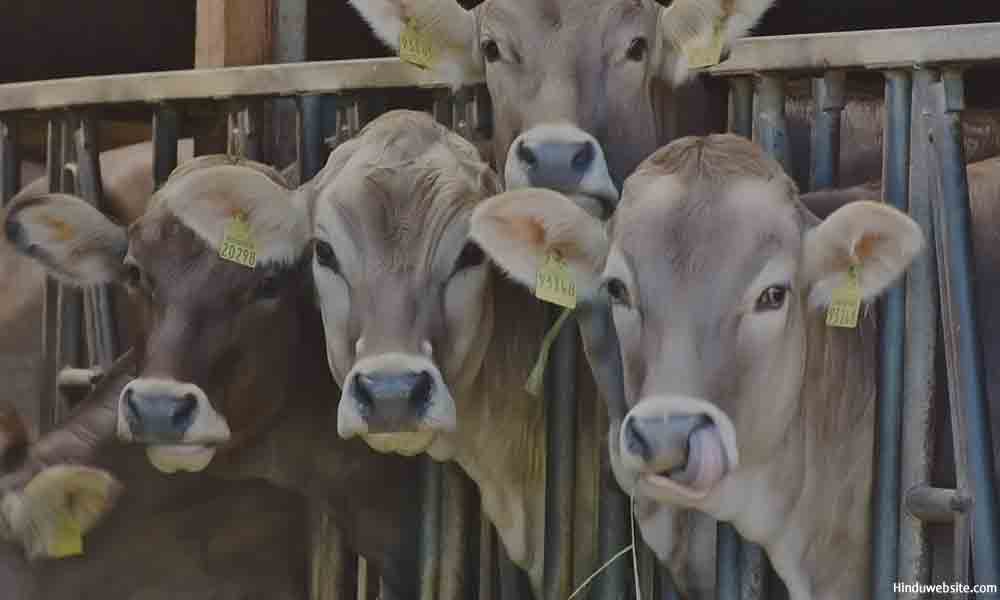
Consumers who purchase meat in restaurants or grocery stores may have limited visibility into the conditions and procedures used in animal agriculture prior to slaughter and processing. Across some production systems, routine management practices are used to control breeding, growth, and handling, and these procedures may be performed with varying levels of pain mitigation. Examples cited in animal-welfare reporting include branding, castration, physical alterations (such as dehorning or beak trimming), and the use of hormones or antibiotics. Concerns have also been raised about confinement and housing conditions, such as calf housing with limited light and ventilation, narrow gestation or holding crates for pigs that restrict movement, and crowded poultry housing that can contribute to injury or reduced mobility. During processing, birds may be placed into scalding tanks to facilitate feather removal, and male chicks in the egg industry may be culled shortly after hatching, including through maceration; other culling methods reported include gassing, decapitation, or suffocation. Advocates and investigators argue that these practices can cause significant pain, stress, or injury, while industry groups note that standards and methods vary by country, operation, and certification program. Overall, these issues are frequently discussed in the context of meeting large-scale demand for meat and animal products and the degree of transparency available to consumers.
3. Vegetarian food improves health and Wellbeing
Vegetarian food is healthier than meat. It is now well established that all animal food products contain cholesterol, thereby increasing the chances of the clogging of arteries. The risk of cancer and heart disease said to decrease with vegetarian diet. There is a growing conviction among health experts that plant diet not only reduces heart disease but also in some cases reverses it. The American Diabetes Association states that consuming vegetarian food lowers the risk of type 2 diabetes and cholesterol levels. Vegetarian diet does not pose as many health problems as animal food. Properly planned and prepared vegetarian food is suitable for people of all ages and backgrounds, even for pregnant women, infants and adolescents. It also contributes to weight loss and the prevention of obesity. However, one has to be careful about the way the vegetables are grown and whether any chemicals are used in their cultivation. Meat producers use a variety of antibiotics and chemicals to improve the quality of the meat and the growth of the animals. One of its unintended consequences is the rise of antibiotic-resistant super bugs, which are making the treatment of many human diseases and illnesses difficult.

4. It leads to the conservation of drinking water and energy
Meat production has a major impact upon the conservation of drinking water and energy. Production of vegetarian food requires a fraction of land, water and energy required to produce meat. For example, farm animals consume a lot of harvest feed and water. Uncontrolled grazing reduces the soil quality and water retention capacity of green pastures, resulting in soil erosion and loss of biodiversity. Farm animals also consume large quantities of water for drinking, cleaning and other purposes and add to the problem of drinking water scarcity. In arid regions, where water is already scarce, maintaining large cattle populations result in the drying of wells and depletion of local water resources resulting in other socioeconomic problems. It is estimated that 6-17 times as much land, 4-26 times as much water and 6-20 times as much fossil fuel is required to produce one pound of animal protein compared to one pound of soy protein.
5. It will save our oceans and aquatic life
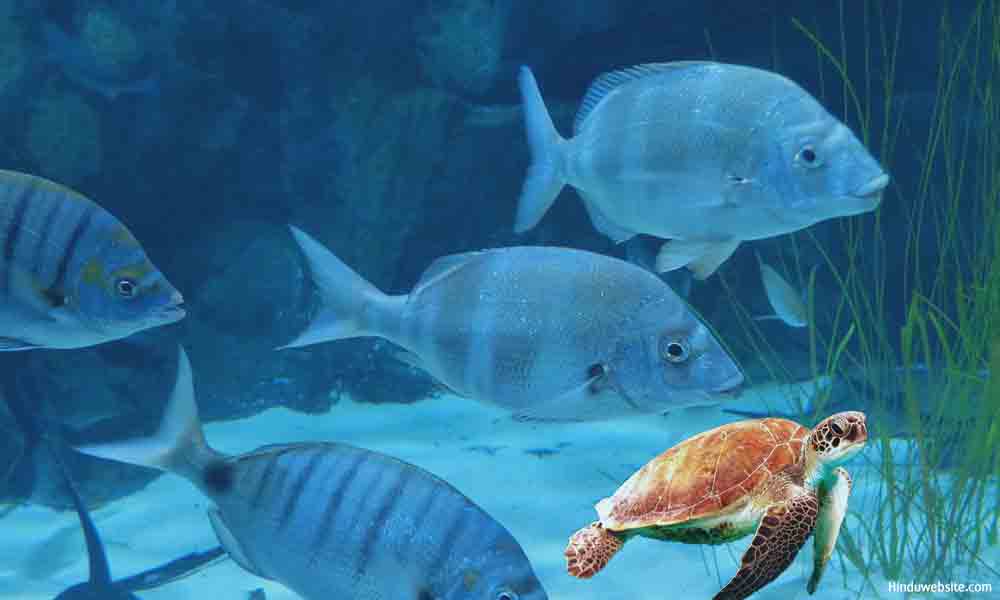
The Living Blue Planet Report, released by the World Wildlife Fund (2015), reported a substantial decline in global marine populations over recent decades and warned that many species face increasing risk. Multiple analyses attribute a significant share of these declines to fishing pressure, including large-scale and non-selective methods such as trawling, netting, dredging, and illegal fishing, which can result in high levels of bycatch and habitat disturbance. Separate projections have suggested that, if current harvesting and management practices do not change, some commercially important fish and seafood species could become substantially less abundant by the mid-21st century. Overfishing can reduce biodiversity, alter food webs, and weaken the resilience of marine ecosystems, with potential downstream impacts on coastal economies and communities that rely on fisheries. In addition, fishing activity and associated industrial practices can contribute to broader environmental stressors, including seabed degradation and changes in ecosystem function. These findings are commonly cited in discussions about the need for improved fisheries management, enforcement, and more sustainable seafood supply chains. Some reporting also links depleted fish stocks and reduced small-scale fishing incomes in parts of Asia, Africa, and the Americas to broader economic insecurity that can contribute to migration pressures, including movement toward Europe and the United States; however, migration patterns are typically influenced by multiple interacting factors.
6. You can consistently live your values
Eating vegetarian food is a necessity in many religious traditions for those who want to practice spirituality and engage in self-transformative practices. Even where it is allowed, the practice is usually discouraged with a number of restrictions. Hence, those who eat only vegetarian food have a better opportunity to practice nonviolence and other moral and spiritual values without any mortal or spiritual conflicts. They can universally extend love, nonviolence and compassion to all creatures without any guilt or remorse. They can also feel good about themselves since they do not directly or indirectly engage in any acts of violence or cruelty towards animals and are not complicit in the painful and inhuman practices of the meat and poultry industry. If you are a spiritual person, it is morally difficult to reconcile your love for pets and other animals with your preference for animal food. If you believe in karma and the liberation of souls, you may have to cope with cognitive dissonance whenever you consume animal food, be it a religious or social function or otherwise, ignoring the harm and pain it must have caused to some poor creatures which made that enjoyment possible.

7. You can facilitate the spiritual evolution of all beings
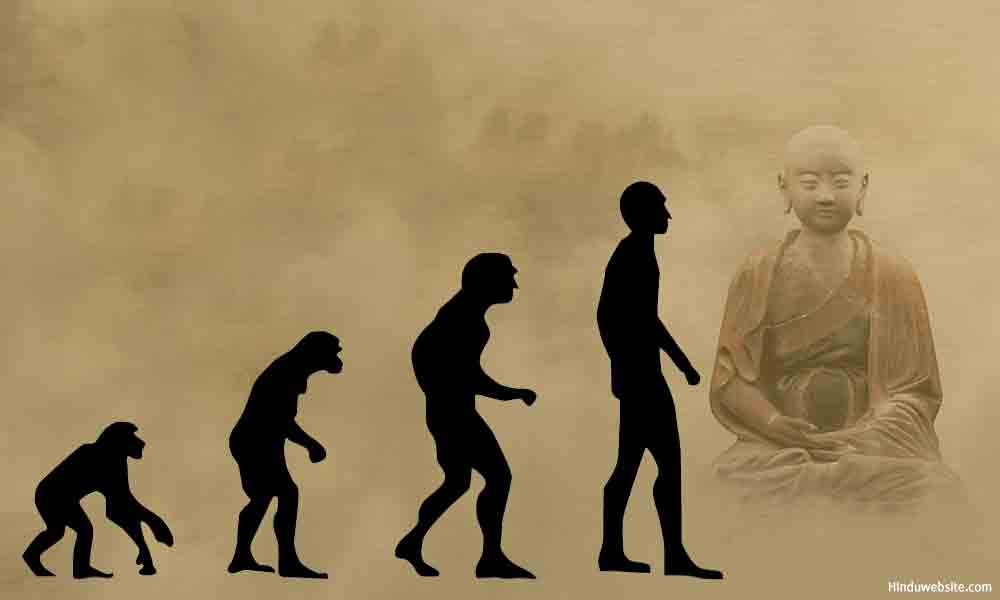
Buddhism, Hinduism and Jainism consider killing of humans and animals a sinful practice. Killing for pleasure or for selfish and egoistic purposes results in sinful karma and leads to one’s moral and spiritual downfall and delay in spiritual progress. They also hold that animals are not spiritually inferior to humans, since they share the same spiritual destiny. They also evolve physically, mentally and spiritually just as humans, and have the potential to take birth as humans in their future lives. Therefore, they emphasize that all living beings deserve to be treated with respect, love and compassion as anyone likes to be treated by others. These traditions also regard nonviolence as the highest ideal. Therefore, if you are a vegetarian and hold those beliefs, you have a better opportunity to be in harmony with your spiritual and religious values and facilitate the physical, moral and spiritual evolution of all beings upon earth.
8. It improves climate and environment.
We have already discussed how horticulture and agriculture compared to commercial meat production reduces the consumption of water and energy and saves the oceans and the earth from destruction and depletion of life and resources. Apart from having such negative effects upon climate and environment, farm animals are also responsible for large quantities of greenhouse gas emissions. In case of plants, trees and other forms of vegetation, the opposite happens. They clean the environment and reduce greenhouse effect, as they consume carbon dioxide and release oxygen in return. A United Nation Report states that livestock is one of the major causes of environmental degradation, deforestation and reduction of biodiversity, with associated problems such as pollution, climate change, overfishing, sedimentation of coastal areas and the spreading of invasive species. These problems can be mitigated by promoting vegetarianism.

9. It will save the planet and the humanity
The planet earth is the main sufferer in the progress of our civilization. When we talk of climate change or environment, we ignore the destruction we cause to the earth and other living beings as we strive to satisfy our needs such as food, shelter, comfort, need for belongingness, etc. Although most governments enacted laws to prevent cruelty to animals and the wanton destruction of wildlife and forests, the food industry wields considerable influences upon the local governments to protect their business interests, taking advantage of loopholes that exist in the laws. They engage in questionable farming and fishing practices that are painful and cruel and cause untold misery to the farm and aquatic animals. The Deep sea fishing, the dredging of ocean floors and other unethical practices do irreparable loss to the planet. We have already discussed how overgrazing and over consumption of harvest feed can affect the soil fertility and availability of drinking water. Vegetarianism can answer most of these problems. If a large number of people opt for vegetarian food, they can save the planet and the humanity from many ethical, social and climate related problems.

10. It reduces crime and violence in society
Some studies show that killing animals as a profession or working in slaughter houses or witnessing the bloodshed and mayhem on a regular basis, makes people less empathetic to the suffering of others. As they witness the continuous violence and cruelty which is inflicted upon animals, they may either become depressed and apathetic or develop a rather sadistic, insensitive and aggressive mindset. Studies also show that the areas where slaughter houses operate report a higher incidence of violent crimes and social aggression. One of the common, spiritual beliefs associated with the continuous consumption of meat and animal products is that it leads to the preponderance of grossness and animal nature, making their spiritual transformation rather difficult and almost impossible. On the other hand, vegetarian food is considered to be spiritually pure (sattvic), which facilitates spiritual growth and refinement of character and conduct.

Image Credits: The images used in this articles under each subheading are licensed under CC0 Creative Commons License. This article is copyright Hinduwebsite.com and should not be reproduced in any format without prior written permission.
Disclaimer: The information provided herein is for information purposes only. It is not meant to hurt the sentiments of any particular community. We do not take any responsibility for its scientific accuracy. Readers are advised to do their own research and due diligence to ascertain facts.