Ten Distinguishing Features Of Hinduism
The Ten Distinguishing Features of Hinduism
Summary: This article outlines ten major features that distinguish Hinduism from other world religions . It explains foundational concepts such as Atman, Brahman, and the vast pantheon of gods and goddesses, along with the Trimurti and the tradition’s extensive scriptural literature. The page also explores Hinduism’s complex ritual system, its cyclical understanding of creation, the central role of the Mother Goddess, and the doctrines of karma, rebirth, and liberation. Together, these features offer a concise yet comprehensive introduction to Hinduism’s philosophical depth, spiritual diversity, and enduring cultural significance.
Hinduism is world's oldest, continuing religion. It is more appropriate to regard Hinduism as a composite religion since it contains many traditions that are technically religions themselves. For example, although Vaishnavism, Shaivism and Shaktism are sects within Hinduism, they have millions of followers and stand in their own right as independent religions. Apart from them, there are schools of philosophy, and teacher traditions in it, which command more followership than the recognized world religions such as Judaism, Zoroastrianism, Jainism and Sikhism. Hinduism has a long history. Its oldest beliefs and practices are rooted in prehistory, which date back to nearly 10,000 years. However, the name Hinduism, and its status as an organized, world religion are of recent origin and legacies of India's colonial past. How can you distinguish Hinduism from other world religions? The following are the ten most distinguishing features of Hinduism.
1. Belief in Atman, the Individual Self
In Hinduism, an individual soul is called Atman, meaning that which breathes. The Atman is eternal, indestructible, infinite, without qualities and imperfections. Hence, it is more correctly called the individual Self rather than a soul. According to Hinduism, all living beings, including animals, birds, insects, and other creatures, possess souls. For the soul, the body is a mere cover or clothing, which it discards at the time of death. Since the Self is different from the body and the mind, it can be known only in a transcendental state when the mind and the senses are inactive and silent.
2. Belief in Brahman the Supreme Self
Brahman is the highest deity of Hinduism. He is described in the Vedas as the God of gods, the supreme, absolute, eternal, indestructible, omniscient, omnipresent, omnipotent, supreme Self. He is both known and unknown, with form and without form, creator and the created, who is hidden in all as their very essence (Paramatma). He can be realized through self-realization only, and those who attain Him thus are forever freed from rebirth and mortality. At the highest level, Brahman manifests in creation as the Lord of the Creation (Isvara), the Soul of Creation (Hiranyagarbha), and the Body of Creation (Viraj).
3. Belief in gods and goddesses
Hindus worship hundreds, if not thousands of gods and goddesses. Each of them also has aspects, manifestations, emanations, incarnations, projections, associated deities, and attendant deities, which make the Hindu pantheon very colorful, and diverse. These deities reside in several upper worlds of light, and participate in creation as the rays of Brahman, spreading light and delight, keeping darkness away, and helping the humanity to do their part. According to Hinduism, the gods possess miraculous and supreme powers. However, since they are selfless, they do not make food for themselves. Hence, humans have a duty and an obligation to make them regular offerings and oblations to nourish them and keep them strong.
4. Belief in Trimurthis (Trinity).
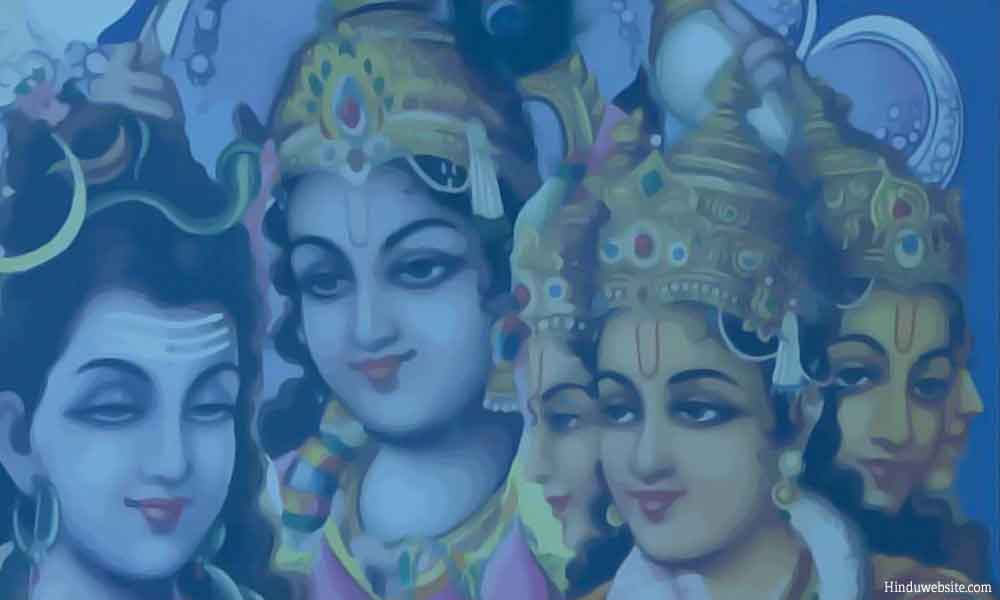
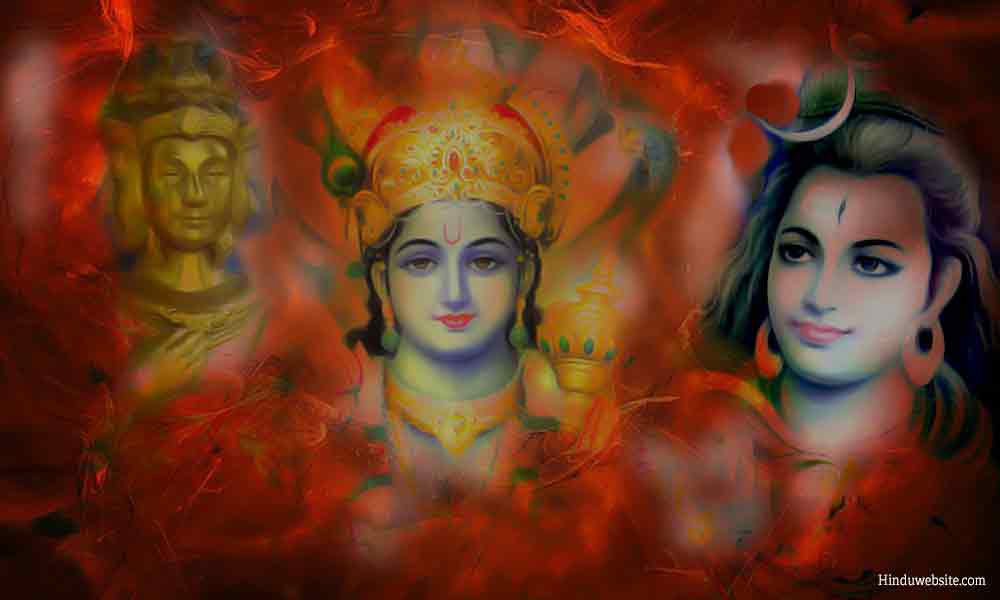
The most popular gods of Hinduism are Brahma, Vishnu and Shiva. According to the Vedas they are aspects of Brahman only who carry out the three principal functions of existence namely, creation, preservation, and destruction. Brahma is the creator, Vishnu the preserver, and Shiva the destroyer. At the beginning of creation, Brahma creates the worlds and beings, and imparts to them the knowledge of the Vedas and how to perform their obligatory duties to keep the worlds going. Vishnu acts as the preserver and protector, and maintains the order and regularity of the worlds thus created. At the end of creation, Shiva destroys the worlds and withdraws everything into himself. Although, functionally the three are separate, each of them is Brahman only in their highest aspect and worshipped as such by their followers.
5. Belief in the divine origin of the Vedas
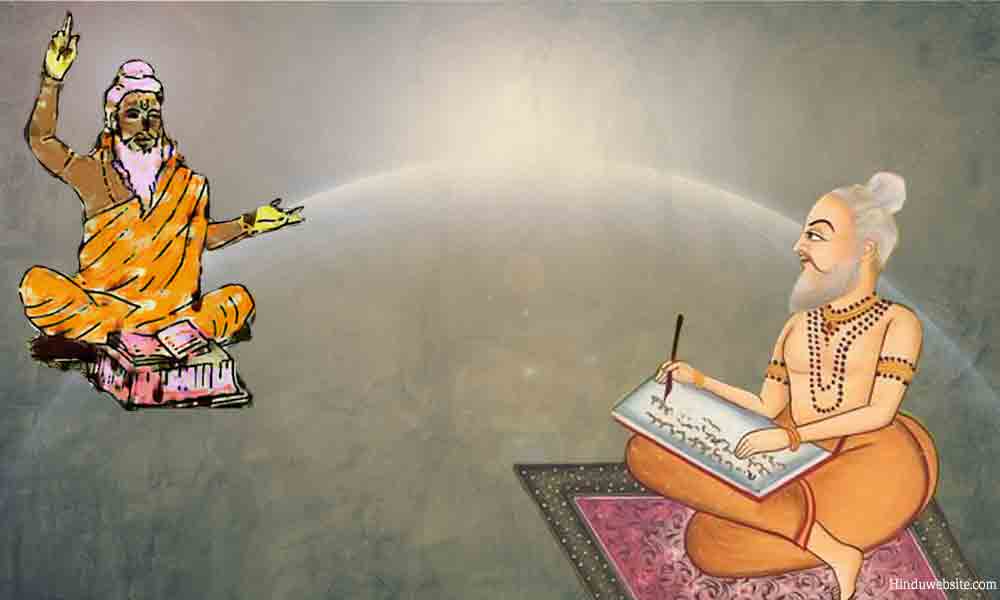
Our knowledge of Hinduism comes from several scriptures, which are divided into revelatory (sruti) and intellectual works (smriti). Chief among them are the Vedas including the Upanishads, the Agamas and Tantras, the law books, the two epics (Ramayana and Mahabharata), the Puranas, the six Vedangas, and several sutras such as Grihyasutras, Yogasutras, Bhaktisutras, Brahmasutras, etc. The Vedas are considered divine in origin and inviolable. Apart from these, there are Gitas (divine songs) such as the Bhagavadgita, and the Astavakragīta, commentaries (bhashyas), ancient plays and dance dramas, vernacular literature, poetic works, philosophical treatises, and hundreds of secular works related to various professions and fields of knowledge such as astrology, music, dance, drama, astronomy, anatomy, hunting, metallurgy, mathematics, cooking, art, architecture, iconography, construction of ritual places, temples, and houses, medicine, and chemistry.
6. Belief in fire sacrifices and other rituals
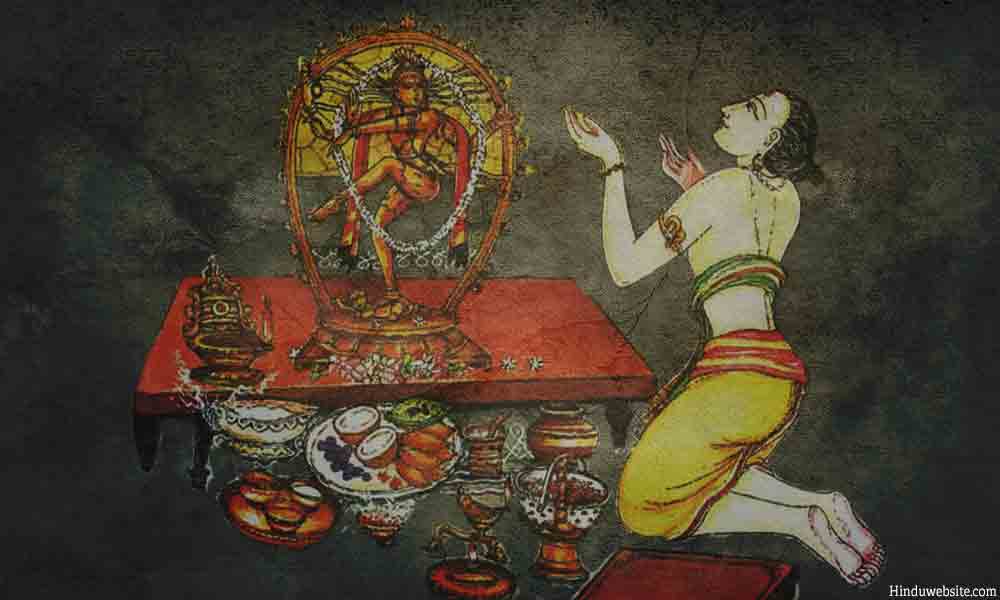
Hinduism has a complex set of rituals that are as ancient as the earliest traditions of Hinduism. Chief among them are fire sacrifices (yajnas). Some are daily rituals, and others are weekly, fortnightly, monthly, annual, or performed once in every few years such as the Kumbhmela. Some are obligatory for householders, and some are optional. Hindus perform their rituals at home, in temples, and sacred places. These rituals go by various names, such as puja, arati, yajnam, homam, vratam, vandanam, stuthi, and nirajanam. Some involve recitation of simple prayers, and some require elaborate arrangements and the assistance of knowledgeable priests. Some fire rituals are so complex that they may take years to perform and cost a lot of money, as the ritual-places have to be built in phases according to strict measurements and geometric calculations, and offerings have to be made at specific time intervals, and at particular auspicious moments (tidhis). There is also a provision in Hinduism to perform the rituals either physically or mentally or both. The rituals are meant to invoke the gods, nourish them, and obtain their help for children, peace, prosperity, success, protection from harm, good luck, and salvation.
7. Belief in the cyclical nature of creation
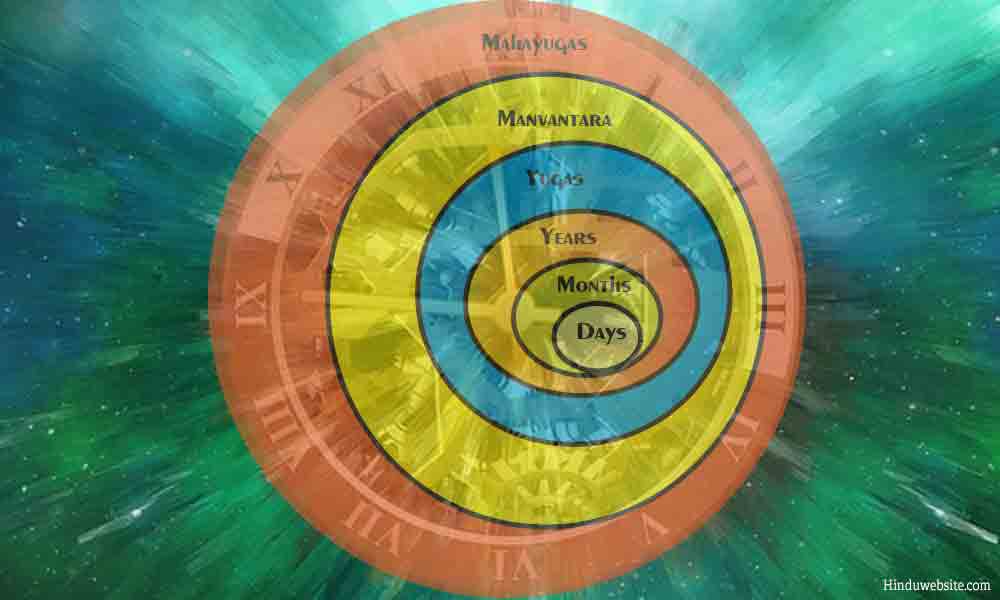
According to some schools of Hinduism, Brahman has two primary states, the wakeful state (nimesa) and the deep sleep state (animesa). When He is awake, time (nimesa) is activated and creation manifests out of Him as a projection, superimposition, or transformation like the web of a spider. When He is asleep, everything is withdrawn, and time becomes timeless (animesa). In the time of Brahman, these are but brief moments, like the opening and closing of his eyelids, but for us each creation lasts for billions of years. Just as days months and years recur in our calendar, creation is also a large time unit that lasts for a long time bur recurs regularly. As surely as each day is followed by night, each creation cycle is followed a period of total inactivity during which everything remains in a primordial and latent state.
8. Belief in Mother Goddess
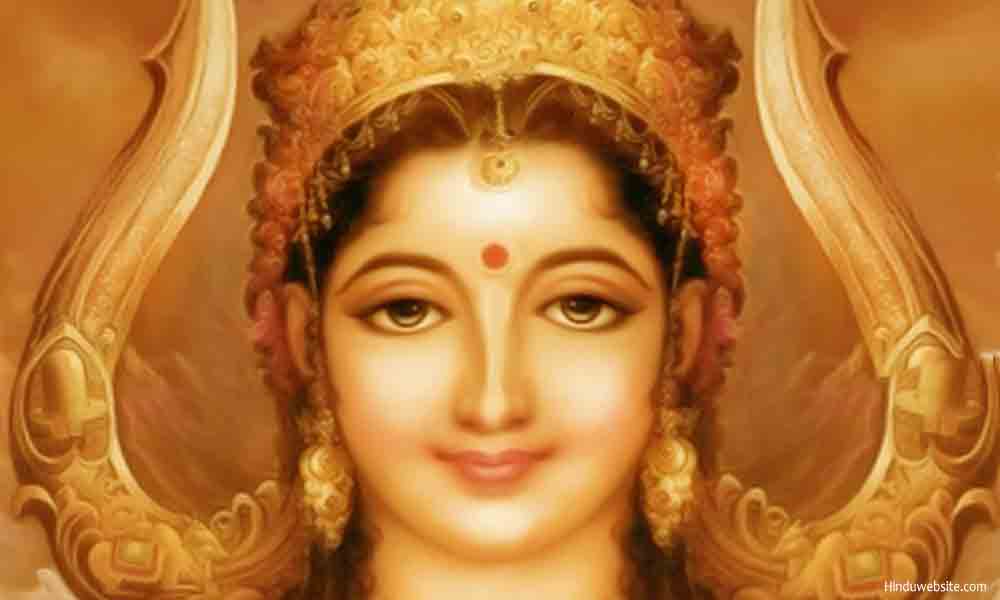
Belief in the Mother Goddess, Shakti, Devi, Universal Mother, or Mother Nature (Prakriti) is one of the most distinguishing features of Hinduism. Brahman is the Self of the universe and of everything present in it, while Shakti is the energy in them without which there can be no movement or activity (chaitanyam). It is shakti who is responsible for the movement of the breath and all the functions in the body. She is both matter (mathar) and energy (shakti) and manifests in numerous forms as energies and dynamic forces (shaktis). Like Brahman, she is also eternal, infinite, and indestructible. If Brahman is the Supreme Will, Shakti is the Will in action. If Brahman is the soul, she is the body. For creation both are important. All the goddesses in Hinduism are considered manifestations of Shakti only. Each of them is traditionally associated with a corresponding manifestation of Brahman. Prominent among them are Sarasvathi, Lakshmi, and Parvathi, the consorts of Brahma, Vishnu and Shiva respectively. Each of them has several alternative names, aspects, manifestations and associate deities. They are worshipped either independently or along with their consorts. There is also a sect of Hinduism, called Shaktism, which recognizes Shakti as the Supreme Ultimate Reality and creator of all.
9. Belief in karma and rebirth
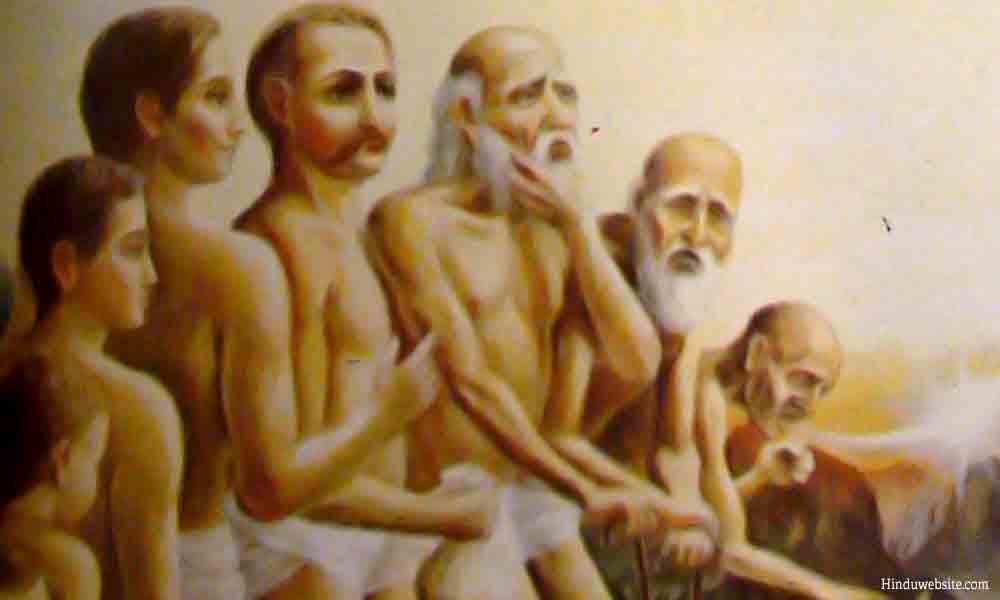
In Hinduism karma is the fruit of your actions, which arises not as a substance, but as an effect. When you perform actions out of desires, and assume ownership and responsibility for your actions, as if you are the doer who is separate from God, you usurp the power and the role of God, and thereby become responsible for their consequences. Both your good and bad actions, and so also your actions and inactions, produce karma. The karma you incur is of several types. Some you exhaust and some you incur in this life, and the total of what is left unexhausted is carried forward to your next life. Thus, the karma you accumulate over several lives is responsible for your rebirth and any positive or negative consequences that arise from them. The unexhausted karma accompanies the soul as latent impressions (samskaras) and form the seed for your destiny in future lives. Karma cannot be extinguished unless you renounce doership and your desire for the fruit of your actions.
10. Belief in liberation
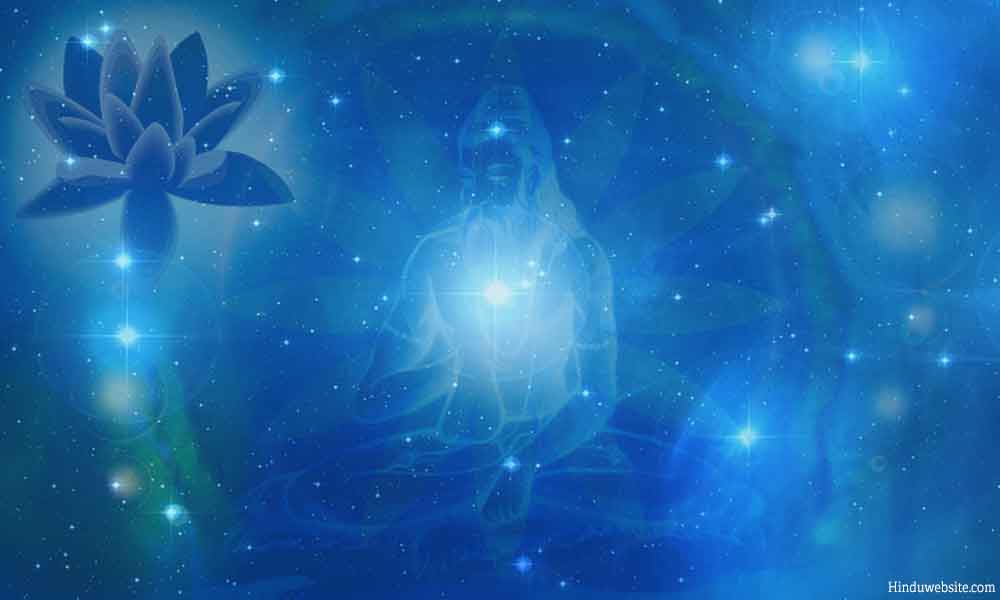
In Hinduism, Moksha, liberation, is the highest goal and a major belief around which much of its philosophy and ritual practices are established. It is the permanent solution to the problem of human suffering and marks the end of a soul's journey on Earth. Hindus belief that a person bound to the cycle of births and deaths (samsara) due to the ongoing nature of karma cannot escape from it unless he achieves final liberation. This is called mukti, moksha, or nirvana, which is the highest goal of any human being on earth. Liberation means liberation from the hold of Nature, from the compulsion of embodiment or having a body, from the tyranny of desires, and from the limitations to which beings are subject. It is a return to the soul's original state, which is the state of your true nature, pure consciousness, or Atman. According to Hindu philosophical traditions, liberation is the highest and ultimate goal of human life. Only one in a million, after innumerable births, comes to the realization that he has suffered enough through births and deaths and must escape from the bonds of life. Liberation can be achieved only through renunciation by sacrificing worldly life and all desires (tyaga), cultivating detachment, developing God consciousness, leading a God centric life, acquiring the right knowledge through study, practicing virtue, and spending time in contemplation and exclusive devotion to God.
Conclusion
Hinduism is a complex and composite religion. For those who want to know Hinduism in detail the ten distinguishing features provide an overview as a good starting point. However, each of them is a subject in itself and requires further study. Hinduwebsite.com provides lot of information about them, which you can go through to know Hinduism further. Alternatively, you can use this link to purchase my book, Introduction to Hinduism, which provides a comprehensive overview of the religion. The book is currently shipped to only certain countries. Therefore, please check for the applicability.
Image Credits: The images used in this articles are either in public domain or licensed under various Creative Commons Attribution-Share Alike Generic licenses by Wikipedia, Himalayan Academy Publications and Wikimedia. This article is copyright Hinduwebsite.com and should not be reproduced in any format without prior written permission.