Buddhist Monk Ethics - Dīgha Nikāya Rules and Training Guidelines
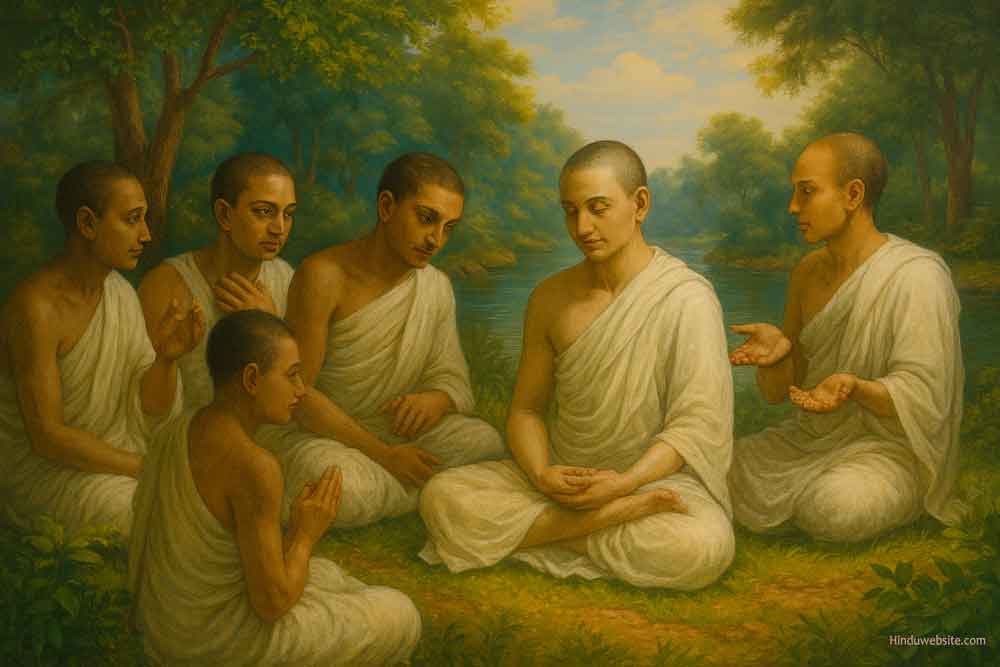
Summary: This essay presents Buddhist monastic ethics and training principles as found in the Dīgha Nikāya, the first collection of the Buddha's long discourses. Unlike the comprehensive Vinaya Piṭaka with its 227 Patimokkha rules, the Dīgha Nikāya provides ethical frameworks, behavioral expectations, and disciplinary guidelines that complement the formal monastic code. Drawing from key suttas including the Sāmaññaphala Sutta (DN 2), Brahmajāla Sutta (DN 1), Mahāparinibbāna Sutta (DN 16), Sigālovāda Sutta (DN 31), and Saṅgīti and Dasuttara Suttas (DN 33-34), the article organizes over 40 training principles into five categories: Ethical Restraints (sīla), Right Livelihood and Conduct, Social Restraints, Mental Discipline (samādhi and paññā), and Sangha Governance, providing a comprehensive overview of the foundational moral and disciplinary expectations for Buddhist monks.
A Buddhist monk is expected to observe a certain code of conduct in order to overcome his desire for the objects of the world and end his suffering.
To continue the three fold practice of sila (morality), prajna (wisdom) and samadhi (tranquility) on the Eightfold Path and overcome all types of craving, he has to exercise a great restraint on his thoughts, desires and behavior.
According to the tenets of early Buddhism, every monk who declared allegiance to the Buddha, the Dhamma and the Sangha was expected to follow the Eightfold Path and observe a certain code of conduct as specified in the teachings of the Buddha.
The code was based upon the life of the Buddha himself, what he practiced in his early days as a monk in search of Nirvana and later as the enlightened Buddha.
The early Buddhist monks were mostly wanderers and mendicants, who were inspired by the teachings and the personality of the Buddha himself. They travelled from village to village and rested only during the rainy season in special dwelling places known as aramas or viharas.
During their stay they practiced community and character building activities, helping each other to gain a better understanding of the teachings of the Buddha through recitation, discussions and contemplation.
Ethical framework and rules for monks from the Dīgha Nikāya
The Dīgha Nikāya contains several suttas where the Buddha lays out ethical foundations for monks, behavioral restraints, rules for speech, rules for livelihood, ules for social interaction, rules for communal harmony, tules for mental discipline, rules for avoiding wrong views, and rules for monastic governance. Through them, he prescribed rules, standards, and expectations for monks. However, they do not present the full monastic code (Vinaya as stipulated in the Vinaya Piṭaka). Instead, they provide the ethical frameworks, training principles, and disciplinary expectations that complement the Vinaya and serve as guidelines for the monks to remember. The teachings preserved in it are considered minor rules” (aniyata and sekhiya-type behaviors) that help monks cultivate purity of conduct.
- Give up injury to life and lay aside all types of weapons and instruments of harm.
- Live modestly, full of mercy, desiring compassion and welfare of all living things.
- Not take not what is not given, accept what is given and wait till it is given.
- Live in honesty and purity of heart.
- Give up sexual desire. He should practice celibacy and overcome the desire for sexual intercourse.
- Give up false speech, speak truth, keep faith, should be faithful and trustworthy and should not break his promise.
- Give up slander, not repeat what he heard in one place to another in order to cause strife, strive to unite those who are divided by strife, encourage those who are friends, take delight in peace, and speak such words that establish and make for peace.
- Give up harsh speech, speak words that are devoid of blame and criticism, words that are pleasing to the ears, touching the heart, cultured, pleasing to the people and loved by them.
- Give up frivolous talk, speak appropriately at the right time, in accordance with facts, with words full of meaning, memorable, timely, well illustrated, measured and to the point.
- Not to cause harm to plants seeds.
- Take only one meal at a time, not eat during the night or at the wrong time.
- Not watch shows or attend fairs with song dance and music.
- Not wear ornaments, or adorn oneself with garlands, scents, or cosmetics.
- Not use high or large beds.
- Not accept gold or silver, raw grain, or raw meat.
- Not accept women or girls, bondmen or bondwomen, sheep or goats, fowls or pigs, elephants or cattle, horses or mare, fields or houses.
- Not act as a go-between or a messenger.
- Not buy or sell, or falsify with scales, weights or measures.
- Not to engage in bribery, cheating, or fraud.
- Not use large or luxuious seats
- Not gather food from multiple sources
- Not engage in military duties,use weapons or worldly subjects such as mathematics, politics, or poetry.
- Not perform errands for householders
- Not practice fortune‑telling, astrology, or omens, or interpret dreams
- Not practice rituals for personal gain
The Brahmajāla Sutta (DN1) lists 62 wrong views which the Buddha instructed monks to avoid. The following restraints pertain to the rule of the restraint of speech which protect monks from entertaining wrong views.
- Speculation about the past or future
- Eternalist or annihilationist views
- Metaphysical debates
- Claims of psychic powers for gain
- Boasting about attainments
- Engaging in philosophical disputes for prestige
In the Sigālovāda Sutta (DN 31) primarily addressed to laypersonz, the Buddha describes how monks should be treated, what they should embody, and what should be expected of them.
- Worthiness of respect
- Purity of conduct
- Compassion and teaching
- Freedom from greed and anger
The Mahāparinibbāna Sutta (DN 16) which describes Buddha's final days and his last worlds to the monks, contains the following instructions he left for them. They are foundational for the monastic code.
- The Dhamma and Vinaya shall be their teacher
- Minor rules may be abolished (though the Sangha later kept them)
- Respectful behavior toward elders
- Harmony in the Sangha
- No taking of gold or silver
- No storing of food
- No accepting of special privileges from kings
- Proper handling of disputes
- Proper procedures for ordination and communal acts
Saṅgīti Sutta and Dasuttara Sutta (DN 33 & 34) contain lists summarizing righteous conduct, whch serve as training guidelines. They include:
- Lists of virtues monks should cultivate
- Lists of unwholesome qualities to abandon
- Lists of meditative attainments
- Lists of duties toward teachers and fellow monks
A summary of the monastic rules found in the Dīgha Nikāya
| Category | Rule / Training Principle | Source (DN) |
|---|---|---|
| Ethical Restraints (Sīla) |
Abstaining from killing living beings | DN 2 |
| Abstaining from stealing | DN 2 | |
| Abstaining from sexual intercourse | DN 2 | |
| Abstaining from false, harsh, divisive, and idle speech | DN 2 | |
| Abstaining from intoxicants | DN 2 | |
| Abstaining from eating at improper times | DN 2 | |
| Abstaining from dancing, singing, music, and shows | DN 2 | |
| Abstaining from garlands, perfumes, and adornments | DN 2 | |
| Abstaining from high or luxurious beds | DN 2 | |
| Abstaining from accepting gold and silver | DN 2, DN 16 | |
| Right Livelihood & Conduct | No buying or selling | DN 2 |
| No cheating, bribery, or fraud | DN 2 | |
| No fortune‑telling, astrology, or interpreting omens | DN 2 | |
| No interpreting dreams for gain | DN 2 | |
| No performing rituals for worldly benefits | DN 2 | |
| No practicing worldly arts (poetry, politics, math, etc.) | DN 2 | |
| No harming seeds or plants | DN 2 | |
| No storing food | DN 2, DN 16 | |
| Social Restraints | No attending games, fairs, or entertainments | DN 2 |
| No running errands for householders | DN 2 | |
| No military service or using weapons | DN 2 | |
| No accepting special privileges from kings | DN 16 | |
| Proper respect toward teachers and elders | DN 16, DN 33 | |
| Mental Discipline (Samādhi & Paññā) |
Avoiding speculative metaphysics and wrong views | DN 1 |
| No boasting about attainments | DN 1 | |
| Cultivating mindfulness, concentration, and insight | DN 2, DN 33 | |
| Developing the seven factors of awakening | DN 34 | |
| Sangha Governance | The Dhamma and Vinaya shall be the teacher | DN 16 |
| Proper handling of disputes | DN 16 | |
| Procedures for communal acts and ordination | DN 16 | |
| Harmony and unity within the Sangha | DN 16 |