Mindfulness: The Heart of Buddhist Practice
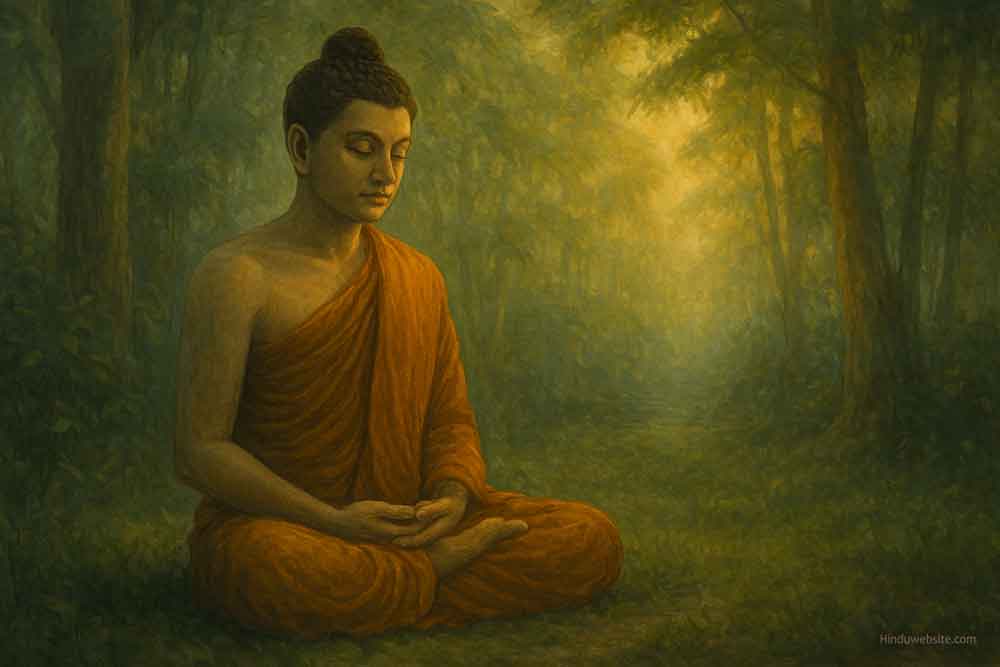
Summary: This comprehensive guide explores mindfulness (Sati) as the heart of Buddhist practice, examining the Four Foundations of Mindfulness (Satipaṭṭhāna) - body, feelings, mind, and mental objects. The essay details practical cultivation methods including Ānāpānasati (breath mindfulness), contemplation of five elements, and development of qualities like friendliness, compassion, joy, and equanimity. Drawing from Satipaṭṭhāna Sutta and other Buddhist texts, it explains how continuous, non-judgmental awareness leads to insight, detachment, and liberation, establishing mindfulness as the direct path to purification and the guardian of skillful mental qualities.
Mindfulness is the complete awareness of all the movements that happen within oneself, within the mind and body, and outside of oneself, in the immediate surroundings. It is becoming aware of the present moment happenings in one's body, mind and consciousness and in the world outside. The Buddha
We have several explanations of what constitutes right mindfulness, and their essence is the same: to be mindfully aware without being attached or judgmental. The Buddha defined mindfulness in the following words.
“This is the direct path for the purification of beings… the four establishments of mindfulness: mindfulness of the body, feelings, mind, and mental objects.” Satipaṭṭhāna Sutta, MN 10.
Thus, from his perspective, mindfulness is essentially an internal and inward practice, very similar to the practice of withdrawing the mind and senses into oneself to engage in meditation. However, unlike in meditation, in mindfulness practice one becomes an observer without suspending the observation or becoming lost in thoughts.According to Buddhist scriptures, right mindfulness is to remain focused on these things continuously without getting involved with them and without becoming attached to them. We come across the following definition in the Digha Nikaya (22).
"There is the case where a monk remains focused on the body in & of itself — ardent, alert, & mindful — putting aside greed & distress with reference to the world. He remains focused on feelings in & of themselves... the mind in & of itself... mental qualities in & of themselves — ardent, alert, & mindful — putting aside greed & distress with reference to the world. This is called right mindfulness..."
Complete mindfulness comes with practice, with the development of certain states of mind, where by an individual becomes detached from the material things he would ordinarily seek, gains control over his or her thoughts, desires and impulses and achieves a complete and continuous awareness of what is happening both in the internal world and the external world.
The benefits of mindfulness practice
The benefits of right mindedness are many. The Buddha defined mindfulness practice as the path to deathlessness in the following words.
“Mindfulness, I say, is helpful in every way. And what is the one thing that, when developed and cultivated, leads to the Deathless? Mindfulness directed to the body.” Ekadhamma Sutta, AN 1.21–22.
In the Satipaṭṭhāna Saṁyutta, he rightly observed mindfulness as the guardian of the mind since it guards one from falling into unwholesome thoughts.
"Just as the dawn is the forerunner of the sunrise, so mindfulness is the forerunner of all skillful qualities.” SN 47.35.
In Bojjhaṅga Saṁyutta, he declared that the practice of mindfulness, which is based on "which is based upon seclusion, dispassion, and cessation," prevents the mind from wandering and matures into liberation. In Satipaṭṭhāna Samyutta (SN 47.19) he said that it would prevent the mind from being swept away "by greed, hatred, or delusion."
What is the state of someone who is mindful? The Buddha identified as the following.
“A monk is mindful, clearly knowing when going forward and returning; when looking ahead and looking away; when bending and stretching; when carrying the robe and bowl; when eating, drinking, chewing, and tasting.”
With right mindedness comes the mindfulness, the complete and continuous awareness of who you are and what you are, your reactions, thoughts and feelings and your relationship with the nature of the things of the world with whom you interact. You become conscious and watchful of every moment and every movement within as well as without. This awareness and state of mind help you to develop the discretionary power to avoid the wrong movements of the body and mind or lapsing into lethargic inertia. With mindfulness you develop insight into the nature of things and learn to deal with your suffering and feelings more peacefully. You become aware of things that bind you or disturb you and through this awareness you will develop wisdom, detachment and inner stability.
"This is the direct path for the purification of beings, for the overcoming of sorrow & lamentation, for the disappearance of pain & distress, for the attainment of the right method, & for the realization of Unbinding — in other words, the four frames of reference." Dīgha Nikaya 22
With the right mindfulness comes the ability to abandon the wrong view and develop the right view, abandon the wrong resolve and stay with the right resolve, abandon the wrong speech and practice right speech, abandon the wrong action and follow the right action and abandon the wrong livelihood and pursue the right livelihood. (Majjhima Nikaya 117)
This state of right mindedness does not come to us so easily. It has to be practiced with great concentration, sincerity and discipline. The Buddha gave a detailed account of how to develop right mindedness to his son Rahula, when they were staying together at Savatthi at the monastery of Anathapindaka, in the grove of Jeta. The main aspects of this discourse are described in the next section.
How to practice mindfulness?
Right mindfulness can be cultivated by concentrating on the things of the world, with the awareness that "this is not mine, this is not I and this is not my soul.' "All material forms, past, present, or future, within or without, gross or subtle, base or fine, far or near, all should be viewed with full understanding-with the thought 'This is not mine, this is not I, this is not my soul," declared the Buddha.
This should be practiced in connection with not only material forms, but also sensation, perception, the psychic constructions, and consciousness. The Buddha further explained on what types of objects one should develop this kind of concentration order to develop right mindedness. They are
- Earth: as hair, nail, teeth, skin flesh, and similar things.
- Water: as bile, phlegm, pus, blood, sweat and similar things.
- Fire: as the digestive elements that help in the digestive process.
- Air: as the upward or the downward movement of breath; and
- Space: as the orifices of ears and nose, the door of the mouth, and the channels through which the food and water move in and out of the body.
These five personal elements, together with the five external elements, make up the total of the five universal elements. They should all be regarded objectively, with right understanding, thinking 'This is not mine, this is not me, this is not my soul.' With this understanding attitude a man develops detachment from the five elements and his mind takes no delight in them.
Contemplation of these five elements will lead to detachment and equanimity. For example, people throw all types of clean and unclean things on the earth, into the water, into the fire, into the air and into the space. But these actions do not disturb the elements, nor do they feel repelled or disgusted by the things that touch them. They remain the same all the time, irrespective of what is happening all around them. When one starts observing these things with concentration, one develops similar state of mind.
The Buddha also declared that right mindedness required a certain all round development of personality which was characterized by the development of the following exceptional qualities.
- The state of friendliness, where by ill-will would grow less,
- The state of compassion which would reduce vexation,
- the state of joy with which aversion would grow less,
- The state of equanimity which would reduce repugnance to things.
- The state of consciousness of the corruption of the body, by which passions would grow less;
- The state of the consciousness of the fleeting nature of all things, with which pride of selfhood would grow less.
Mindfulness of breath, Ānāpānasati
The state of mind of ordering the breath is achieved by conscious breathing, continuously observing and controlling ones breathing movements and with complete control on ones thoughts. As the monk exhales and inhales consciously, he should train himself to be conscious of the whole of his body, the components of his mind, realize the impermanence of all things, or to dwell on passionlessness and renunciation. The state of controlled breathing when developed and increased, is very productive and helpful. And when the mind is thus developed a man breathes his last breath in full consciousness, and not unconsciously.
The Buddha taught that the practice of mindfulness of breathing, In the Ānāpānasati Sutta, MN 118 of Majjhima Nikāya, he suggested that breathing in and experiencing the whole body. one should breathe in which results in the calming of the mind and body. In the same Sutta, he presented the core teaching of the practice, which leads to the fulfillment of the four foundations:. mindfulness of the body, feelings, mind, and mental objects.
“Breathing in long, he knows: ‘I breathe in long.’ Breathing out long, he knows: ‘I breathe out long.’ Breathing in short, he knows: ‘I breathe in short.’ Breathing out short, he knows: ‘I breathe out short.’”
Conclusion
With right mindfulness comes the awareness of ones true nature and the ability to deal with the feelings and movements of the mind peacefully with detachment and right understanding. One realizes the fleeting nature of the sensory world and of things in general and there by learns to accept things with equanimity. Right mindedness is the key to follow the eightfold path diligently.