The Round of Rebirth — Samsara
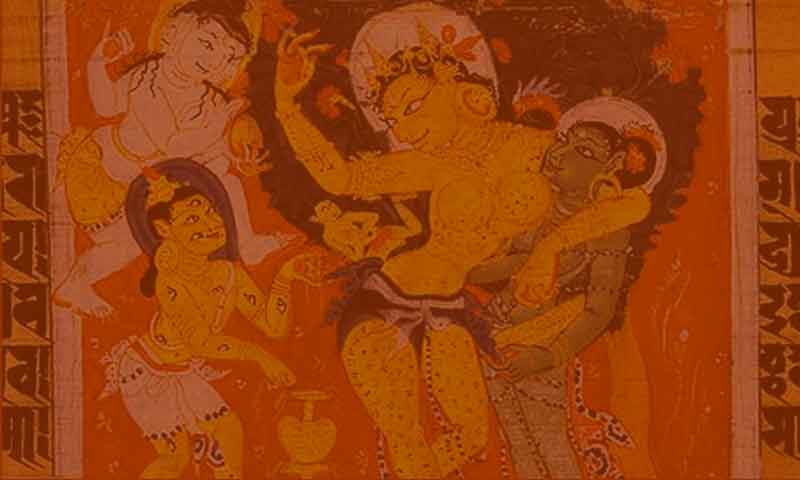
Summary: Samsara — the endless round of birth, death, and rebirth — is a central concept in Buddhism. This essay presents selected teachings from the Buddha on the nature of samsara, the suffering inherent in this cycle, and the conditions that perpetuate rebirth. It draws from the Buddha's own words to illuminate the reality of existence and the urgency of finding the path to liberation.
"Which is greater, the tears you have shed while transmigrating and wandering this long, long time — crying and weeping from being joined with what is displeasing, being separated from what is pleasing — or the water in the four great oceans?...
This is the greater: the tears you have shed... "Long have you (repeatedly) experienced the death of a mother. The tears you have shed over the death of a mother while transmigrating and wandering this long, long time — crying and weeping from being joined with what is displeasing, being separated from what is pleasing — are greater than the water in the four great oceans. "
Long have you (repeatedly) experienced the death of a father... the death of a brother... the death of a sister... the death of a son... the death of a daughter... loss with regard to relatives... loss with regard to wealth... loss with regard to disease.
The tears you have shed over loss with regard to disease while transmigrating and wandering this long, long time — crying and weeping from being joined with what is displeasing, being separated from what is pleasing — are greater than the water in the four great oceans.
"Why is that?
From an inconstruable beginning comes transmigration. A beginning point is not evident, though beings hindered by ignorance and fettered by craving are transmigrating and wandering on.
Long have you thus experienced stress, experienced pain, experienced loss, swelling the cemeteries — enough to become disenchanted with all fabricated things, enough to become dispassionate, enough to be released."
— Sutta Nipata XV.3
This precious human birth
"Monks, suppose that this great earth were totally covered with water, and a man were to toss a yoke with a single hole there.
A wind from the east would push it west, a wind from the west would push it east.
A wind from the north would push it south, a wind from the south would push it north.
And suppose a blind sea-turtle were there. It would come to the surface once every one hundred years.
Now what do you think: would that blind sea-turtle, coming to the surface once every one hundred years, stick his neck into the yoke with a single hole?"
"It would be a sheer coincidence, lord, that the blind sea-turtle, coming to the surface once every one hundred years, would stick his neck into the yoke with a single hole."
"It's likewise a sheer coincidence that one obtains the human state.
It's likewise a sheer coincidence that a Tathagata, worthy and rightly self-awakened, arises in the world.
It's likewise a sheer coincidence that a doctrine and discipline expounded by a Tathagata appears in the world. Now, this human state has been obtained.
A Tathagata, worthy and rightly self-awakened, has arisen in the world.
A doctrine and discipline expounded by a Tathagata appears in the world. "
Therefore your duty is the contemplation: 'This is stress...This is the origination of stress...This is the cessation of stress...This is the path of practice leading to the cessation of stress.'"
— Sutta Nipata LVI.48
Why do we wander in samsara?
"It's because of not understanding and not penetrating four things that we have wandered and transmigrated on such a long, long time, you and I. Which four?
"It's because of not understanding and not penetrating noble virtue that we have wandered and transmigrated on such a long, long time, you and I.
"It's because of not understanding and not penetrating noble concentration that we have wandered and transmigrated on such a long, long time, you and I.
"It's because of not understanding and not penetrating noble discernment that we have wandered and transmigrated on such a long, long time, you and I.
"It's because of not understanding and not penetrating noble release that we have wandered and transmigrated on such a long, long time, you and I.
"But when noble virtue is understood and penetrated, when noble concentration... noble discernment... noble release is understood and penetrated, then craving for becoming is destroyed, the guide to becoming (craving and attachment) is ended, there is now no further becoming."
— Anguttara Nikaya IV.1
Source: Prepared by jtb for Access to Insight. Reproduced and reformatted from Access to Insight edition © 2005 For free distribution. This work may be republished, reformatted, reprinted, and redistributed in any medium. It is the author's wish, however, that any such republication and redistribution be made available to the public on a free and unrestricted basis and that translations and other derivative works be clearly marked as such.