The Hindu Caste System: Past, Present and Future – Book by Jayaram V
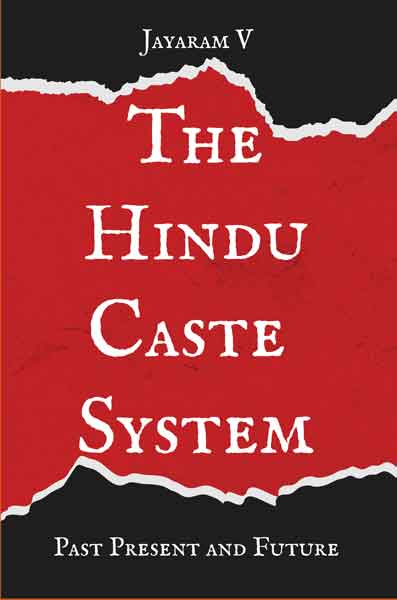
The Hindu Caste System: Past Present and Future by Jayaram V
Summary: The Hindu Caste System: Past, Present and Future is Jayaram V’s comprehensive and reader‑friendly examination of one of Hinduism’s most enduring and debated social structures. Drawing on Vedic sources, Dharma Shastras, historical developments, and modern realities, the book explains how the early varna model evolved into the complex caste system known today. It explores both its perceived functions and its human costs, including inequality, exclusion, and the long struggle for reform. With clarity and balance, the book invites thoughtful reflection on continuity, change, and the ethical responsibilities shaping the future of caste in Hindu society.
Detailed Book Summary
A clear, balanced understanding of caste is essential to understanding Hindu society, past and present. The Hindu Caste System: Past, Present, and Future by Jayaram V explores how the early Vedic varna framework developed, how it was justified through scripture, law, and social custom, and how it continues to shape relationships, institutions, and debates today. Without sensationalism, the book addresses both the system’s historical functions and its human costs, including inequality, exclusion, and the long struggle for reform. Written in a modern, accessible voice, it guides readers through key ideas such as dharma, karma, varnashrama dharma, and the arguments for and against caste, inviting thoughtful reflection on what continuity, change, and accountability can look like in the future of Hinduism.
The Hindu Caste System: Past, Present, and Future by Jayaram V is a wide-ranging, reader-friendly exploration of one of the most persistent and debated features of Hindu social life. The book’s central aim is to create informed awareness of the caste system, explain how it developed from earlier models of social organization, and consider what meaningful reform could look like in the modern world, without denying either history or lived consequences.
The opening chapters clarify a key distinction: the ancient Vedic varna system is not always identical to what many people mean today by “caste,” even though the terms are often used interchangeably. Jayaram traces how varna was framed in early sources and how it became connected to social hierarchy, hereditary identity, and prescribed duties (varna dharma). Along the way, he explains how traditional ideas, especially dharma, karma, rebirth, and the fear of negative consequences, helped normalize social stratification and encouraged people to accept inherited status as a moral or cosmic outcome rather than a social choice.
A significant portion of the book examines how caste distinctions were supported and regulated through Dharma Shastras and other authoritative texts, including references to the Vedas, the Bhagavad Gita, and the Upanishads. The discussion does not treat “scripture” as a single, uniform voice; instead, it highlights tensions within the tradition, including the contrast between universal spiritual ideals and the reality of exclusion. Jayaram also reviews historical factors that helped caste endure across centuries, political patronage, village enforcement, marriage rules, occupational inheritance, and the pressures of community identity, showing how social systems can persist even when they no longer fit changing ethical standards.
Importantly, the book does not present the story as one-dimensional. It considers why caste survived by discussing both perceived benefits and harms. On one side are arguments about continuity of tradition, social cohesion, and division of labor; on the other are the realities of discrimination, restricted opportunity, social fragmentation, and the suffering of those pushed to the margins, including outcast communities historically labeled “untouchable.” Jayaram’s approach is to acknowledge complexity while still confronting the moral and social problems the system has created.
Later chapters broaden the lens by looking at caste in relation to life-stages and duty-based frameworks such as varnashrama dharma, as well as the way renunciant and ascetic traditions often unsettle caste identity by demanding the abandonment of social labels. The book also includes an Upanishadic perspective, especially through the lens of the Vajrasuchika Upanishad, to emphasize the idea that spiritual worth and self-realization are not guaranteed by birth, lineage, or social rank.
The closing movement focuses on the present and the future: how caste dynamics continue in subtle and overt forms, what legal and social reforms have changed, and why deeper attitudinal change remains necessary for a more inclusive Hindu community. This book is for general readers, students, and thoughtful practitioners who want a clear, historically grounded, and practical overview of caste, its origins, its arguments, and the urgent questions surrounding its reform.