Shiva Sutras: Mystic Knowledge Explained by Jayaram V
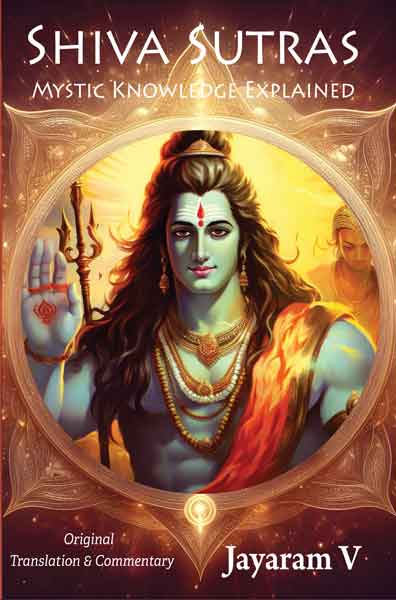
Shiva Sutras: Mystic Knowledge Explained
Summary: Shiva Sutras: Mystic Knowledge Explained presents Jayaram V’s original translation and practical commentary on one of the central texts of Kashmiri Shaivism. Known for its concise, “coded” aphorisms, the Shiva Sutras are here unfolded with clarity, context, and a focus on lived spiritual practice. The book guides readers through themes such as Shiva–Shakti, māyā, levels of consciousness, mantra, inner power, and the disciplines of yoga and contemplation. Designed for sincere seekers and students of Hindu spirituality, this edition offers an accessible yet tradition‑grounded pathway into Shaiva Tantra and the transformative insights of the sutras.
Detailed Book Summary
Shiva Sutras: Mystic Knowledge Explained offers a clear, practice-minded way into one of the most influential texts of Kashmiri Shaivism. With an original translation and commentary, Jayaram V guides readers through sutras that are famously brief, and often puzzling without context, showing how their “coded” language points toward lived insight, not just philosophy. You’ll explore core Shaiva Tantra themes such as Shiva–Shakti, māyā, levels of consciousness, and the inner disciplines of yoga and contemplation, including the value of silence between thoughts. Written for sincere seekers as well as students of Hindu spirituality, this book aims to support self-inquiry, inner clarity, and a more grounded approach to meditation.
Shiva Sutras Mystic Knowledge Explained: With Original Translation and Commentary (First print edition 2024) is Jayaram V’s translation and practical commentary on the Shiva Sutras, a concise yet far-reaching text at the heart of Kashmiri Shaivism and the wider Shaiva Tantra tradition. Traditionally connected with Vasugupta (often placed around the 8th century), the sutras are known for their compressed, “coded” style, brief statements that assume a reader already understands key ideas and inner disciplines. This book is written for people who sense the depth of the sutras but want a clearer entry point: a guide that stays rooted in traditional interpretations while showing how the teachings relate to meditation, self-inquiry, and inner transformation.
A major value of this edition is its intent to provide context rather than leaving readers alone with difficult aphorisms. Jayaram V explains that the sutras often use tantric symbolism and technical terms that can be confusing without guidance. Accordingly, his commentary repeatedly translates doctrine into lived practice: how consciousness becomes limited, how attention can be refined, and how spiritual effort matures into stable inner clarity. The book presents the Shiva Sutras not only as philosophy, but as a map of consciousness that addresses everyday obstacles, restlessness of mind, identification with the body, and the subtle ways desire and ego shape experience.
The work emphasizes a core Kashmiri Shaivism vision: reality as the play of Shiva and Shakti at different levels, with Shiva as constant pure consciousness and Shakti as dynamic power. In this framework, the mind and body can function as obstacles when they are clouded by impurity and delusion, yet the same inner energies can become allies when they are purified through yoga and contemplative discipline. Readers will encounter recurring themes such as māyā, tattvas (the principles through which experience is structured), and the role of inner power in transformation.
The book also speaks directly to a common seeker’s question, how higher states of awareness are accessed, while noting an important boundary in the Tantra tradition: many specific techniques are transmitted privately within teacher lineages and are not openly disclosed. Instead of promising shortcuts, the commentary points to principles, orientation, and readiness.
Structurally, the text follows the classic three-part arrangement (unmeṣas), each associated with an upāya, or method. This organization is helpful for purchase-minded readers because it clarifies what kind of “path” the book actually presents.
Part 1, Śāmbhavopāya, is described as the most direct approach. Here the focus is on recognizing pure consciousness and learning to rest in it. The introduction explains this method through attention to the “interluding space” or silence between two states of consciousness or between two thoughts, an idea that will resonate with readers exploring meditation and mindfulness, but presented in distinctly Shaiva terms. The commentary frames this as a practical doorway: by repeatedly returning attention to stillness, a seeker gradually weakens the momentum of mental modifications and tastes a more fundamental awareness.
Part 2, Śāktopāya, turns to the way of Shakti, inner transformation supported by sacred sound, mantra, and contemplative disciplines. The book discusses the idea that mantras are not merely words to recite, but vehicles of power when approached with the right intent, knowledge, and inner preparation. A key topic here is mātr̥kā (matṛkā), the power present in letters and sounds, especially within the Sanskrit alphabet, and how this relates to consciousness, knowledge, and spiritual refinement. The commentary also stresses the importance of a qualified guru as a guiding means, especially for practices that involve subtle energies and concentrated inner work.
Part 3, Anavopāya, addresses a more effort-based path of purification and transformation, working with the mind-body system and the limitations that arise through conditioned nature. Here readers meet practical yogic themes such as the nadis (energy channels), chakras, and the gradual mastery of impulses and distractions. The section also includes cautions: progress can be accompanied by partial attainments or “powers” that may distract seekers if purity and discernment are not emphasized. The book’s tone is direct about this: spiritual growth is not merely collecting experiences but dissolving the causes of bondage and stabilizing awareness.
Beyond the sutra-by-sutra commentary, the book includes a “Shiva Sutras – Free Translation” section. For many buyers, this is a deciding feature: it provides a streamlined rendering of the teachings that can be read as an overview before returning to the detailed explanations. It functions like a guided second pass, helping readers grasp the flow of the text without being overwhelmed by dense terminology.
Throughout, Jayaram V’s approach is devotional yet practical. The writing repeatedly returns to the lived aim of the tradition: purification, recognition of one’s deeper nature, and a movement toward nonduality (oneness) that is meant to inform ordinary life, not only meditation sessions. Readers curious about Hindu spirituality beyond the Bhagavad Gita and Upanishads will find here a focused entry into Shaiva Tantra through one of its most cited root texts, with enough structure to support sustained study.
This book is for general spiritual seekers and meditation practitioners who want an accessible, tradition-grounded guide to the Shiva Sutras and Kashmiri Shaivism, while still offering depth for serious students who prefer a full translation alongside explanatory commentary.