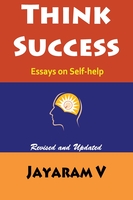
An Interview With Jayaram V – Author of Think Success

Summary: This interview with Jayaram V in 2010 explores the inspiration, purpose, and development of his self‑help book Think Success. He discusses the need for sustainable support for Hinduwebsite.com, the value of well‑crafted self‑help guidance, and what sets this 470‑page collection apart. The conversation highlights key themes such as confidence, responsibility, mindset, emotional balance, and practical life skills. Jayaram also reflects on the book’s structure, its relevance for readers facing modern pressures, and his broader approach to personal growth, discipline, and long‑term success.
What prompted you to publish your book, Think Success?
The short answer is sustainability. For 14 years, I have funded Hinduwebsite.com largely out of pocket. After leaving my IT career to work on the website full-time, I invested heavily to build and maintain the site, yet the revenue we generate still does not reliably cover basic operating costs. Publishing Think Success is one practical way to support the website’s mission while giving readers a focused, lasting resource they can return to beyond the quick, one-time nature of online reading.
Online audiences often expect content to be free, current, and instantly available, which makes long-term publishing difficult, especially for a free public service. We also hear from readers who prefer a print format and want a curated, edited collection rather than scattered web pages. Over the years, the site has grown significantly and earned strong visibility despite limited resources. To keep improving performance, expand coverage, and create more opportunities for writers, we need dependable funding. This book is part of that plan, and it is also written to help readers take practical responsibility for their goals, habits, and results.
In your view, how useful are self-help books?
When they are well written and applied consistently, self-help books can be genuinely useful. They can motivate you, give you practical frameworks, and help you stay steady when life (or even people around you) is discouraging. That said, no book is a magic solution. The value comes from choosing a few solid guides and revisiting them. Think Success is designed to be one of those go-to resources: it brings 44 focused articles together so you can find the right chapter for the challenge in front of you.
Given the number of self-help books available, what distinguishes your book?
Think Success is broad, practical, and easy to use. At 470 pages, it is not meant to be read in one sitting, it works well as a chapter-by-chapter guide you can return to as needed. Readers will find clear guidance on building confidence, taking responsibility, improving daily effectiveness, overcoming fear and self-limiting beliefs, and strengthening the mindset that supports long-term progress. Each topic is treated in depth, with realistic steps for people who are ready to apply what they learn. It is especially relevant for readers navigating uncertainty and competition, where focus, determination, and a positive mental attitude are not optional, but essential.
Which topics in the book do you personally find most compelling?
It is hard to pick just a few, because each article addresses a different real-life pressure point. If a reader is wrestling with fear, negative self-talk, or low confidence, those chapters can be immediately helpful. If the goal is achievement and direction, the success-focused chapters are a strong starting point. Personally, I often return to Maturity of Mind and Adult Behavior, The Pillars of Prosperity, The Qualities of Successful People, and The Power of Determination.
Could you share a brief overview of the book?
Think Success is a practical collection on building success through a positive mental attitude. It is organized around four areas:
Resolving problems or overcoming hurdles such as loneliness, fear, intense emotions, low self-esteem, negative self-talk, and adversity. Building practical skills such as listening, memory, negotiation, and reading. Improving quality of life through greater self-awareness, learning to stay present, relax, plan the day effectively, and protect mental and physical health. Achieving professional success by observing effective practices, taking control of one’s life, strengthening personal foundations, and planning a career or vocation.
Do you believe success is necessary in life?
Yes, if we define success simply as accomplishing a goal, from small tasks to major milestones. In everyday life, that kind of success builds confidence, creates options, and improves quality of life. From a Hindu perspective, life is traditionally guided by four aims, dharma (duty), artha (well-being), kama (desire), and moksha (liberation). Success matters within that larger framework, but it is not the final destination. As spiritual maturity grows, attachment to worldly outcomes needs to loosen. The ideal is to act with purpose and discipline, while letting go of anxiety over results and keeping sight of life’s deeper meaning.
Why did you remove your self-help articles from the website?
Because many pieces were written over a decade, they needed substantial revision. I did not want earlier drafts online to shape readers’ expectations of the book, so I removed them temporarily while finalizing the edited version.
PS: These articles have since been restored.
Do you plan to publish additional self-help books?
Not now. If a topic strongly calls for a shorter follow-up, I may publish one. More broadly, I plan to release additional books based on both selected website articles and fresh writing, revised, expanded, and updated in the same spirit as Think Success.
What general advice would you offer to readers?
Try to do what is right, and support the people who do. Keep a long-term view: actions, habits, and character shape outcomes more than any distinct advantage. Be kind, disciplined, and principled. Possessions do not last, but the impact of what we do, and the mindset we cultivate, stays with us. And do not treat life casually. Use it as a chance to live responsibly, learn deeply, and understand who you are.