Bhagavadgita A Simple Translation: With Notes & Chapter Summaries
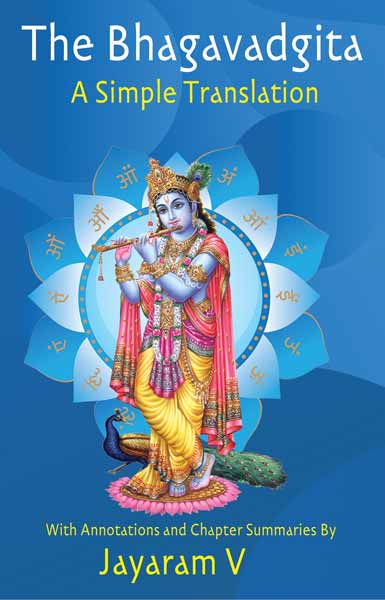
Bhagavadgita A Simple Translation: With Notes & Chapter Summaries
Summary: The Bhagavadgita: A Simple Translation (Second Edition, 2024) offers a streamlined, reader‑friendly presentation of one of Hinduism’s most influential scriptures. Built around the original Sanskrit verses, it provides a literal word‑to‑word translation supported by brief explanations and chapter summaries that help readers follow the unfolding dialogue between Krishna and Arjuna. The book highlights key teachings on the Self, duty, karma yoga, devotion, renunciation, and inner balance, making the Gita’s philosophical depth accessible without heavy commentary. It is designed for general readers, students, and practitioners seeking clarity, guidance, and practical spiritual insight.
Detailed Book Summary
Reading the Bhagavad Gita doesn’t have to feel intimidating. The Bhagavadgita: A Simple Translation (Second Edition, 2024) by Jayaram V offers a clear, faithful entry into this classic of Hindu spirituality, built around the original Sanskrit verses with a straightforward word-to-word English rendering. Instead of dense, academic commentary, you’ll find concise annotations and chapter summaries that help you follow the dialogue between Krishna and Arjuna, from crisis and doubt to clarity, self-control, and a deeper sense of purpose. With themes of karma, discernment, devotion (bhakti), and liberation, this edition is ideal for everyday readers seeking practical wisdom, quiet reflection, and a more grounded understanding of the Gita’s enduring message.
The Bhagavadgita: A Simple Translation (Second Edition, 2024) by Jayaram V is a streamlined, accessible presentation of one of Hinduism’s most influential scriptures. Designed for readers who want the Bhagavad Gita itself, without the weight of an extensive, verse-by-verse philosophical treatise, this edition centers on a simple word-to-word translation supported by Sanskrit text, brief explanations, and chapter summaries. The goal is clarity: helping you follow the Gita’s message as it unfolds, while still honoring the depth and subtlety that make the text a foundation of Hindu spiritual teaching.
The book opens with introductory notes that explain the author’s approach and the practical challenges of translating an ancient Sanskrit scripture into modern English. Jayaram V emphasizes that even a literal translation is an approximation, because meaning in the Gita is carried not only by vocabulary but also by idiom, symbolism, and the larger worldview behind the words. At the same time, he makes a case for why a careful, grounded translation matters, especially for readers who want to understand core concepts that distinguish the Gita and related traditions such as the Upanishads and Vedanta-influenced thought.
At the heart of the Bhagavadgita is a crisis: Arjuna stands on the battlefield of Kurukshetra, shaken by grief and moral doubt. In response, Lord Krishna guides him through a spiritual and psychological transformation. This edition frames that journey in a way that general readers can track, chapter by chapter, showing how the conversation moves from despair and confusion toward steadiness, discernment, and purposeful action.
Across the 18 chapters, the book presents the Gita’s central teachings in a practical progression. Early chapters introduce the distinction between the Self (Atman) and the perishable body, urging the reader toward inner stability and freedom from fear. The text then develops karma yoga as a path of doing one’s duty without clinging to outcomes, an approach that treats work as a form of offering, rather than a route to anxiety or attachment. As the dialogue deepens, Krishna explains renunciation not as escaping life, but as letting go of possessiveness, doership, and the craving for results, ideas often expressed through themes of self-control, inner discipline, and mental balance.
The middle portion turns attention more directly to the nature of the Divine and the role of devotion (bhakti), describing how a person can orient the mind and heart toward God while living an engaged life. Later chapters return to the human predicament, how qualities of nature, mental tendencies, and ethical character shape experience, and how discernment, detachment, and devotion work together in the pursuit of liberation. Throughout, the annotations and chapter summaries help keep the reader oriented, highlighting key ideas such as desire as a source of bondage, equanimity as a mark of yoga, and the possibility of inner peace through disciplined understanding and practice.
This book is for general readers seeking a clear, guided entry into the Bhagavad Gita, while remaining useful to students and practitioners who want a concise, readable translation for study and reflection.