
Lord Shiva in Ancient Historic Traditions
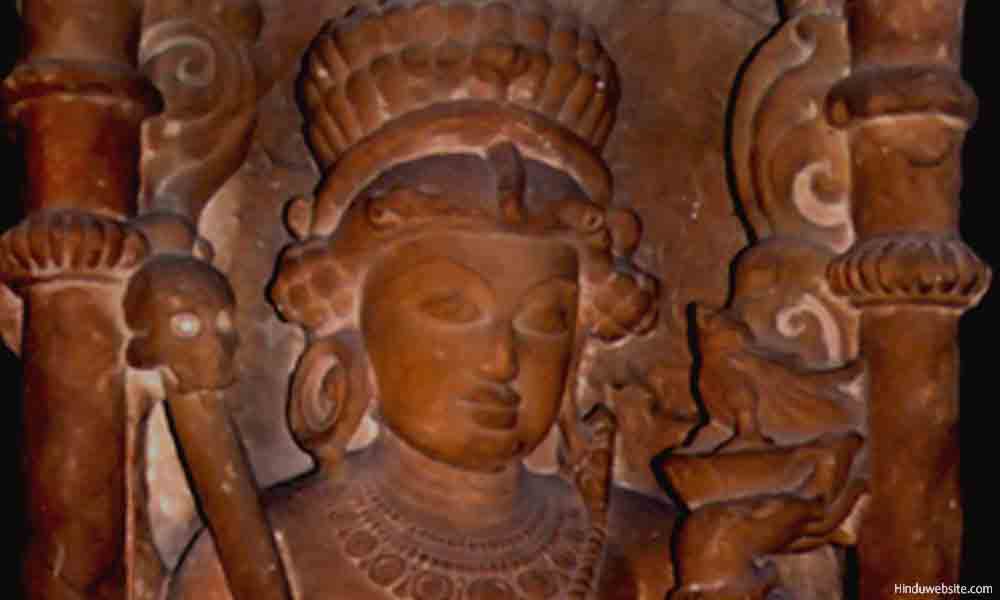
Shiva Lakulisha, Gupta Art, Indian National Museum, New Delhi
Siva (Shiva, Sivam) is one of the most ancient gods of Hinduism, known by many names, forms and aspects, some of which have been lost to us. At one time he was worshipped in various parts of the world with different names and methods. He was the lord of the underworld as well as heavens. He was the lord of both men and animals. He was associated with death, fertility cults, worship of bulls and serpents, magical cures, funeral rites, warrior cults, battle field rituals and human sacrifices. There is even an argument that he is the same God of wrath mentioned in the Bible and worshipped by the Muslims in the Kaaba.
SHe is revered equally by the ascetics as the highest and Supreme Being (Mahesvara) and by the masses as the giver of boons, children and virility. His more benign forms emerged with the changes in our consciousness and the progress of our civilization. The Vedic people feared and revered Siva, which is well evident in the early descriptions of him found in the Vedas. They addressed him as Rudra, the howler and weeper and the fierce god of storms and winds. They distrusted and hated those who worshipped him and at the same time sought his protection through invocations against death and disease and his own wrath. Historically the worship of Siva is rooted in prehistoric religious beliefs and precedes the advent of Vedic religion in northwestern India. By the time the Vedic religion gained a foothold in the Indian subcontinent, Lord Siva was already a popular god, worshipped by many people outside the Brahmanical fold.
When we read the ancient Hindu scriptures including the Vedas and the Puranas it becomes clear that Siva was not a Vedic deity. He was worshipped in India even before the Vedic civilization, most likely in the mountainous regions of ancient India where there was snowfall and by the communities who lived along the river banks and snake infested plains. Shiva was feared because he caused death by taking heat away from living beings and made them cold.
At the same time, he was revered because he saved people from the destructive forces of Nature and brought people back to life by removing poison from their bodies arising from snake bites and curing their diseases with his miraculous chest of medicines. The Vedic people believed in rebirth through male progeny and wealth through cattle. Therefore, they prayed to him for the protection of their children and cattle against disease and death. While we cannot entirely rely upon them for historical facts, we can deduce from the stories and legends contained in them that there was a power struggle of sorts between the worshippers of Shiva and those of the Vedic deities before a compromise emerged and Shiva became an integral part of the Vedic pantheon. Hidden in the stories pertaining to the conflict between Daksha Prajapati and Shiva and the antics of Indra and his attendant deities is the evidence alluding to this conflict and the subsequent compromise.
The Prototype Siva of the Indus Valley Civilization
The Indus people (6000 BC to 2000 BC) probably worshipped a prototype of Siva, but we are not sure whether the male deity depicted in the Indus seals had any connection with him. The seals show a male figure with three faces and a pair of horns over his head, seated on a pedestal in a yogic posture with animals on each side. The presence of animals, the horns over the head, the three faces and the yogic posture do remind one of Siva who is considered as Pasupathi or lord of the animals and whose vehicle is bull. The ancient Sumerians, who lived in the southern Mesopotamia during the same period as the Indus people, worshipped a deity who was also called lord of the animals and they had a goddess who was called the lady of the mountains. She reminds us of Parvathi, the consort of Siva, popularly known as the daughter of the mountains. Excavations at Indus sites also revealed polished stone images in the form of male (ling) and female (yoni) sexual organs, which indicate that the Indus people practiced some fertility cults in which they worshipped Father God and Mother Goddess. That the Indus people might have practiced some primitive form of Saivism is also evident from the bull or bull like images found in the Indus seals.
The Sivan, Chempu and Sembu or the Dravidian Traditions
According to historians several features of Saivism, some popular names of Siva including the name Siva itself and worship of Siva came to us from non-Vedic traditions, especially ancient Dravidian traditions. The Dravidians, known as Dramilas, Dramiza or Termilois1 came to the Indian subcontinent from eastern Mediterranean around 7000 BC. They settled first in northwestern India and then gradually moved inland towards the east and the south. They spoke agglutinative languages, some of which survived in southern India, parts of central Asia2 and Europe3 . According to some scholars, the Dravidians were originally Lemurians who came from a submerged continent known as Lemuria4 or Atlantis during prehistoric times and settled down in some parts of the world such as Greece5 , Mediterranean, India, parts of Europe and probably the Americas6 . The ancient Sumerians7 and Indus people were probably Dravidians. Based on some anthropological similarities, some historians believe them to be Semitic in origin while according to some the Dravidian came from nowhere but were indigenous inhabitants of the Indian subcontinent.
The Dravidians worshipped Siva, whose name seems to have been derived from the Tamil root word shivan meaning the red one. So is the word Shambhu, an epithet of Siva, from chembu or shembu meaning copper or the red metal. The Dravidians had a written language which they used to record their compositions on Palmyra leaves and create books by binding them together. They housed their deities in temples called ko-ils and invoked them by the traditional Indian method of worship known as pooja or puja, which is the most popular form of worship of gods in Hinduism today, in which water, incense, flowers etc.,, are offered to the divinities, seeking their help and blessings. Apart from Siva, they also worshipped Murugan who is equated with Kumara or Skanda, the elder son of Siva. They worshipped snakes, eagles, several village deities (grama devatas) and the monkey god who later became famous as Hanuman.
Sibu, the Tribal God
Siva in ancient India was also known as Sibu, the tribal god of Sibis, an ancient Indian tribe, who lived in the area comprising of present day Punjab. Some places in Punjab allude to their ancient connection with Siva such as Sivapura. The Sibis were an ancient warrior tribe. They wore animal skin, carried clubs and wandered from place to place. Probably the Sibis constituted one of the earliest band of aggressive and virulent ascetics, like the modern day Nirankaris of Sikhism, a tradition that was later on revived by Lakulisa and continued by some sects of Saivism, such as the Kapalikas and in recent times by the Virasaivas. Apart from Sibis, we have indications that many tribes of the Vedic period also worshipped Siva, or aspects of Siva, some of which were subsequently identified with the Rudras of the Vedas and integrated into Saiva Mythology. The Vedic texts8 address Rudra also as Sarva and Bhava, cheat and lord of the thieves, which probably allude to his connection with some neighboring tribes whom they distrusted or feared.
The Rudras of the Vedic religion
There is no mention of the word Siva in the Vedas referring to a particular god, but only a quality of the gods meaning purity. The Vedic people disliked those who worshipped lingas and called them derogatorily as phallus (sisna) worshippers. They however worshipped a fierce god, known as Rudra, the father of Maruts, or Rudras or destructive storm-winds, the healer and giver of medicines, the protector of cows from snakes, who was later equated with Siva. In this aspect he was closely associated with Indra and Agni. The Rig-Veda contains three hymns addressed to Rudra, which extol his virtues and also reflect the ambivalent attitude of the Vedic people towards him. According to the early Vedic hymns, Siva was both an inflictor of evil and rescuer from evil and described in contradictory terms possessing many holy and unholy attributes. The Vedic priests beseeched him not to harm them, their heroes, their children or their cattle and also save them from the evil inflicted by others because he alone had the ability to meet evil with evil. They addressed him as lord of sacrifice, the lord of heroes with braided hair, the physician, the giver of medicines, the impetuous Rudra, the perfector of sacrifice, the wild boar of the sky, the red one , the bounteous one and the ruler of valiant people. They prayed to him for joy, shelter, medicines, health, strength and protection from sickness and anger of gods. Uttering his very name required performance of oblations and purification ceremonies. We can see this conflict of attitude very evident in the Satarudriya, or the hundred names of Rudra, found in the Vajasaneyi Samhita of Yajurveda, about which Monier Monier-Williams9 , writes thus
"In this hymn—a hymn which is of the greatest interest, because constantly used in the present day—he is described as possessing many contradictory, incongruous, grotesque, and wholly ungodlike attributes; for example, he is a killer and destroyer; he is terrible, fierce ( ugra), inauspicious ; he is a deliverer and saviour; he causes happiness, and prevents disease ; he has a healing and auspicious body (siva tanuh); he is yellow-haired, brown- coloured, copper-coloured, ruddy, tall, dwarfish; he has braided locks (kapardin), wears the sacred thread, and is clothed in a skin ; he is blue-necked and thousand-eyed; he dwells in the mountains, and is the owner of troops (gana-pati) of servants who traverse the earth obeying his orders ; he is ruler and controller of a thousand Rudras who are described as fierce and ill-formed (virupa); he has a hundred bows and a thousand quivers; he is the general of vast armies; he is lord of ghosts, goblins, and spirits; of beasts, horses, and dogs; of trees, shrubs, and plants; he causes the fall of leaves ; he is lord of the Soma-juice; he is patron of thieves and robbers, and is himself a thief, robber, and deceiver; he presides over carpenters, chariot-makers, blacksmiths, architects, huntsmen; he is present in towns and houses, in rivers and lakes, in woods and roads, in clouds and rain, in sunshine and lightning, in wind and storm, in stones, dust, and earth."
During the later Vedic period Rudra became a popular and more benevolent deity as is evident from the later Vedic hymns and the Upanishads like the Svetasvatara Upanishad in which he is described as the highest and supreme Being. His unholy qualities were confined to the background, as expressions of an ignorant past, and his principal name became Siva, the holy and auspicious god, the destroyer and cosmic dancer of the Hindu Trinity, who to the pure and holy manifested as the Supreme Being or Mahadeva and to the wicked as Kalabhairava, the fearsome one, or Kali, the dark goddess. As time passed by the auspicious names of Siva grew in number, as is evident from 1008 names mentioned in the Sivapurana, suggestive of his increasing popularity and mass appeal, and the sivalingas and siva temples were erected all over the subcontinent as a mark of respect and devotion and to counter the growing influence of ascetic religions like Jainism and Buddhism. When Buddhism declined in southern India, many Buddhist caves and monuments were converted into places of Siva worship.
Siva of Foreign Traditions
According to James Talboys Wheeler10 , "Siva was a mystic deity of Turanian origin, and described as half-intoxicated with drugs, and associated with ideas of death and reproduction". According to Peter Berresford Ellis11, the ancient Celtic god Cerunnnos, the lord of the animals and a major god in the Celtic pantheon, was Siva. So was Dagda, the good God of the Irish mythology. They appear frequently in the images as seated in the classic lotus position, reminiscent of the images of lord of the animals of the Indus Valley seals. In some images Dadga carries a club, like the ancient Sibis, with which he can both destroy and restore people to life. The Celts also believed in mother goddess, just as the followers of ancient Saivism.
Siva is often compared with Dionysus or Bacchus, the Greek god of wine, ecstasy and vegetation, born to Zeus and the Theban princess Semele. Dionysus incurred the wrath of her rival, Hera, the jealous wife of Zeus, when he traveled to the underworld to rescue his mother. She inflicted madness upon him and made him wander the earth in a state of enchanted madness. During his wanderings he met Rhea who not only cured his madness, but also, for the benefit of his followers, taught him the secrets of happy afterlife. Dionysus continued to roam the earth, accompanied by his enthusiastic followers who clashed cymbals, inflicting madness upon those who opposed him or doubted his divinity. Some European historians erroneously believed that the worship of Siva evolved out of ancient Dionysian cults, where as the opposite is true. About the antecedents of Dionysus, Madame Blavatsky, the founder of Theosophical Society, writes thus12 :
"Bacchus, as Dionysus, is of Indian origin. Cicero mentions him as a son of Thyone and Nisus. Dionusos means the god Dis from Mount Nys in India. Bacchus, crowned with ivy, or kissos, is Christna, one of whose names was Kissen. Dionysus is preeminently the deity on whom were centered all the hopes for future life; in short, he was the god who was expected to liberate the souls of men from their prisons of flesh. Orpheus, the poet-Argonaut, is also said to have come on earth to purify the religion of its gross, and terrestrial anthropomorphism, he abolished human sacrifice and instituted a mystic theology based on pure spirituality. Cicero calls Orpheus a son of Bacchus. It is strange that both seem to have originally come from India. At least, as Dionysus Zagreus, Bacchus is of undoubted Hindu origin. Some writers deriving a curious analogy between the name of Orpheus and an old Greek term, orphos, dark or tawny-colored, make him Hindu by connecting the term with his dusky Hindu complexion."
Conclusion
In ancient India three religious traditions rose to prominence, namely Saivism, Brahmanism and Jainism, of which Saivism was the most ancient. Brahmanism or Vedism, assimilated the best of both these traditions and transformed itself into a religion of great complexity and diversity. While both Vaishnavism and Buddhism grew partly out of Brahmanical and partly out of Jain traditions, Saivism grew entirely by itself. From Saivism Hinduism derived many concepts such as monism, Samkhya, Yoga and Prakriti, while from Jainism it assimilated concepts such as karma, nonviolence and transmigration of souls. Over a period time Saivism became part of Hinduism, where as Jainism maintained its status as a separate religion. Siva, whom the Vedic people revered and feared, became an important deity of the Hindu pantheon and one of the Trinity gods of Hinduism. Saivism continued to enrich the philosophic, religious and temple traditions of Hinduism for centuries, while its more serious followers grouped themselves into several sects and continued to worship Siva in specific ways, enriching in the process both Hindu mythology and philosophy.
Suggestions for Further Reading
- Aspects of Lord Shiva
- Saivism or Shaivism - Basic Concepts
- Shaivism Literature
- Mantra and Yoga
- Nataraja, The Lord of the Cosmic Dance
- What Shankara Means?
- Shaivism Sects
- Siva and Bhavani
- Devotional Prayers to Lord Shiva
- Significance of Lord Shiva
- Shaivism Links, Websites and Resources
- Famous Saints of Saivism
- The Worship of Lord Shiva
- History of Shaivism, Lord Shiva in Vedic Literature and Recorded History
- Methods of Worship in Shaivism
- Hindu Gods - Lord Ganesha
- Gods and Goddesses of Hinduism
- About Goddess Parvathi or Shakti
- Quotes on Religious Tolerance in Hinduism
- Sects and Sectarian Movements in Hinduism
- Hinduism - The Role of Shakti in Creation
- Hindu God Lord Shiva (Siva) - the Destroyer
- A Critical Study of the Chronology of Siddhas
- Hindu God Murugan, Kumaraswami, Skanda or Ayyappa
- Symbolic Significance of The Hindu Trinity, Brahma, Vishnu And Siva
- Essays On Dharma
- Esoteric Mystic Hinduism
- Introduction to Hinduism
- Hindu Way of Life
- Essays On Karma
- Hindu Rites and Rituals
- The Origin of The Sanskrit Language
- Symbolism in Hinduism
- Essays on The Upanishads
- Concepts of Hinduism
- Essays on Atman
- Hindu Festivals
- Spiritual Practice
- Right Living
- Yoga of Sorrow
- Happiness
- Mental Health
- Concepts of Buddhism
- General Essays
References
1. Herodotus called them Termilois. Isidore (sixth century BC) of Seville referred them as Garamantes. The Lycians of Asia Minor referred themselves as Trammili in their inscriptions.
2. Brahui, an ancient Dravidian language is still spoken in some part of Baluchistan, on the Iranian border.
3. The Georgian, Basque and Peuhl languages of Europe are considered to be Dravidian languages.
4. Sadguru Sivaya Subramanyaswami, read the Lemurian scrolls from the Akashic records and translated them for the benefit of mankind. You can read the online version from here.
5. The Pelasagi of pre-Hellenic Greece were probably Dravidians
6. The languages of American Indians are agglutinative. Their blood group is predominantly O positive like that of the Basques whose language is also agglutinative and Dravidian.
7. The Ancient Sumerians worshipped mother goddess, known as the Lady of the Mountains and father God known as the Lord of the Animals. The Sumerian were called Black Faces, just as the followers of Kalamukha (black face) sect of Saivism are called even today.
8. The Satarudriya of Yajurveda
9. Religious Thought and Life in India: An Account of the Religions of the Indian Peoples, By Sir Monier Monier-Williams.
10. James Talboys Wheeler, The History of India From the Earliest Ages.
11. The Celts : a history. By:, Peter Berresford Ellis. Type:, English : Book : Non-fiction. Publisher:, New York : Carroll & Graf, 2004
12. Isis Unveiled by H. P. Blavatsky -- Chapter 2, Part 2, Vol. 2 -- Theosophical University Press Online Edition