
The Arthashastra - Kautilya
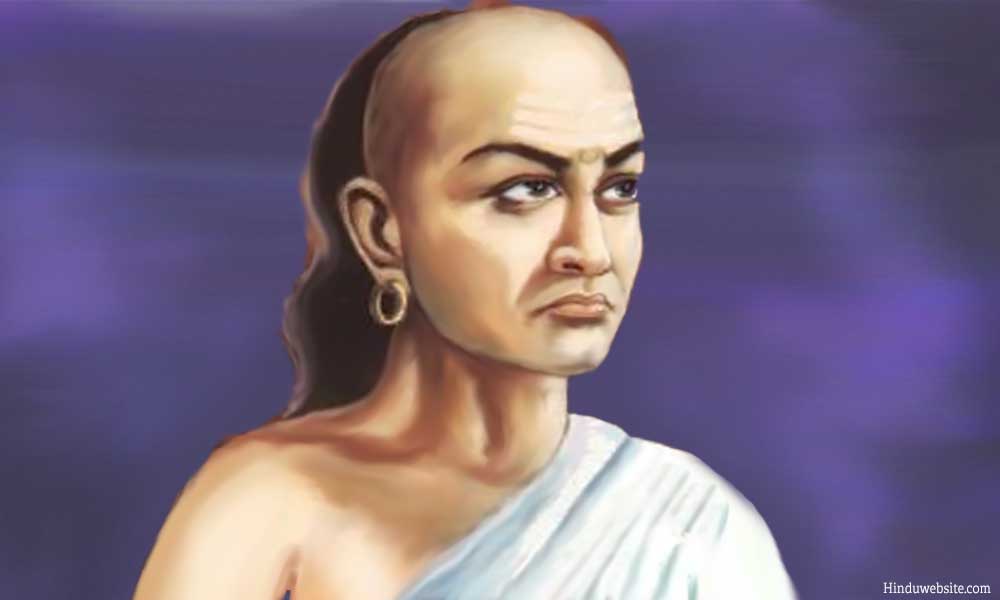
An artistic impression of Chanakya or Kautilya
Introduction
Kautilya, also known as Chanakya, was believed to be the chief minister in the court of Chandragupta Maurya, a contemporary of Alexander and the first great emperor of India who ruled the subcontinent in the 4th Century BC. He is considered the author of the Arthashastra, meaning a texts on wealth. Historically, the Kautilya's work carries a great significance because it is an important source for the history of Mauryas.
The book was discovered by Shamasastri in 1909 who also translated and introduced it to the public. There is a controversy regarding the date of Arthashastra. Shamsastri, V.A. Smith and others believed that it was written by Chanakya, the Prime Minister of Chandragupta Maurya. Others such as Dr.Bhandarkar believed that it was written much later during the early Christian era.
Dr.Jolly believed that the work was originally based on Yajnavalkya Sutras which was composed during the third century A.D. However many Indian scholars hold that the work belongs to fourth century B.C., and it was indeed composed by Kautilya only, whose name is well known in Indian tradition as the minister and confidant who helped Chandgragupta Maurya to capture the empire from the Nandas.
The book containing about 6000 hymns is a comprehensive manual on how a state ought to be ruled and administrated by a king and his administration. It is very detailed and systematic in prescribing solutions to the various problems associated with monarchial form of governance. Several of the administrative suggestions prescribed by the author are still relevant and practicable in the modern administrative world.
There has been a great deal of controversy as to the original author of this work, as some believe it to be the work of one individual by the name Chanakya or Kautilya or some one with the name, while some believe it be the work of several generations of writers belonging to a particular school of political thought.
It is also not certain whether Chankya was truly a minister in the court of Chandragupta Maurya, though legend attributes the success of Chandragupta in ascending the throne to the acumen and clever planning of Chanakya. Interestingly the Arthashastra makes no mention of either Chandragupta Maurya, or his empire or capital, thus lending credence to the theory that its author was different.
Jayaram V
Contents
- Book I, Chapter 7, The Life of a Holy King
- Book I, Chapter 19, The Duties of a King
- Book II, Chapter 10, The Procedure of Forming Royal Writs
- Book III, Chapter 1, Determination of Forms of Agreement
- Book III, Chapter 2, Concerning Marriage and Women
- Book III, Chapter 3, The Duty of a Wife
- Book III, Chapter 6, Special Shares of Inheritance
- Book III, Chapter 8, Buildings
- Book III, Chapter 11, Recovery of Debts
- Book III, Chapter 13, Rules Regarding Slaves and Laborers
- Book IV, Chapter 11, Death with or without Torture
- Book IV, Chapter 12, Sexual Intercourse with Immature Girls
- Book IV, Chapter 13, Punishment for Violating Justice
Book I, Chapter 7: The Life
of a Holy King

Hence by overthrowing the aggregate of the six enemies [lust, anger, greed, vanity, haughtiness, and overjoy], he shall restrain the organs of sense; acquire wisdom by keeping company with the aged; see through his spies; establish safety and security by being ever active; maintain his subjects in the observance of their respective duties by exercising authority; keep up his personal discipline by receiving lessons in the sciences; and endear himself to the people by bringing them in contact with wealth and doing good to them. Thus, with his organs of sense under control, he shall keep away from hurting the women and property of others; avoid not only lustfulness, even in dream, but also falsehood, haughtiness, and evil proclivities; and keep away from unrighteous and uneconomical transactions.
Not violating righteousness and economy, he shall enjoy his desires. He shall never be devoid of happiness. He may enjoy in an equal degree the three pursuits of life: charity, wealth, and desire, which are inter-dependent on each other. Any one of these three, when enjoyed to an excess, hurts not only the other two, but also itself. Kautilya holds that wealth, and wealth alone, is important, inasmuch as charity and desire depend upon wealth for their realization. Those teachers and ministers who keep him from falling a prey to dangers, and who, by striking the hours of the day as determined by measuring shadows, warn him of his careless proceedings even in secret, shall invariably be respected. Sovereignty is possible only with assistance. A single wheel can never move. Hence he shall employ ministers and hear their opinion.
Book I, Chapter 19 The Duties
of a King
If a king is energetic, his subjects will be equally energetic. If he is reckless, they will not only be reckless likewise, but also eat into his works. Besides, a reckless king will easily fall into the hands of his enemies. Hence the king shall ever be wakeful. He shall divide both the day and the night into eight nalikas [1.5 hours], or according to the length of the shadow cast by a gnomon standing in the sun: the shadow of three purushas (3/4 inches), of one purusha (12 inches), of four angulas (3 inches), and absence of shadow denoting midday are the four one-eighth divisions of the forenoon; like divisions in the reverse order in the afternoon. Of these divisions, during the first one-eighth part of the day, he shall post watchmen and attend to the accounts of receipts and expenditure; during the second part, he shall look to the affairs of both citizens and country people; during the third, he shall not only receive revenue in gold, but also attend to the appointments of superintendents; during the fifth, he shall correspond in writs with the assembly of his ministers, and receive the secret information gathered by his spied; during the sixth, he may engage himself in his favorite amusements or in self-deliberation; during the seventh, he shall superintend elephants, horses, chariots and infantry; and during the eighth part, he shall consider various plans of military operations with his commander-in-chief. At the close of the day he shall observe the evening prayer.
During the first one-eighth part of the night, he shall receive secret emissaries; during the second, he shall attend to bathing and supper and study; during the third, he shall enter the bed chamber amid the sound of trumpets and enjoy sleep during the fourth and fifth parts; having been awakened by the sound of trumpets during the sixth part, he shall recall to his mind the injunctions of sciences as well as the day's duties; during the seventh, he shall sit considering administrative measures and send out spies; and during the eighth division of the night he shall receive benedictions from sacrificial priests, teachers and the high priest, and having seen his physician, chief cook and astrologer, and having saluted both a cow with its calf and a bull by circumambulating around them, he shall get into his court. Or in conformity to his capacity, he may alter the time-table and attend to his duties.
When in his court he shall never cause his petitioners to wait at the door, for when a king makes himself inaccessible to his people and entrusts his work to his immediate officers, he may be sure to engender confusion in business, and to cause thereby public disaffection, and himself a prey to his enemies. He shall, therefore, personally attend to the business of gods, of heretics, of Brahmans learned in the Vedas, of cattle, of sacred places, of minors, the aged, the afflicted, and the helpless, and of women; all this in order (of enumeration) or according to the urgency or pressure of those works. All urgent calls he shall hear at once, but never put off, for when postponed, they will prove too hard or impossible to accomplish.
Having seated himself in the room where the sacred fire has been kept, he shall attend to the business of physicians and ascetics practicing austerities; and that in company with his high priest and teacher and after preliminary salutation (to the petitioners). Accompanied by persons proficient in the three sciences but not alone lest the petitioners be offended, he shall look to the business of those who are practicing austerities, as well as of those who are experts in witchcraft and Yoga.
Of a king, the religious vow is his readiness to action; satisfactory discharge of duties is his performance of sacrifice; equal attention to all is the offer of fees and ablution towards consecration. In the happiness of his subjects lies his happiness; in their welfare his welfare; whatever pleases himself he shall not consider as good, but whatever pleases his subjects he shall consider as good. Hence the king shall ever be active and discharge his duties; the root of wealth is activity, and of evil its reverse. In the absence of activity acquisitions present and to come will perish; by activity he can achieve both his desired ends and abundance of wealth.
Book II, Chapter 10: The
Procedure of Forming Royal Writs
Teachers say that the word sasana ("command"), is applicable only to royal writs. Writs are of great importance to kings, inasmuch as treaties and ultimata leading to war depend upon writs. Hence one who is possessed of ministerial qualifications, acquainted with all kinds of customs, smart in composition, good in legible writing, and sharp in reading shall be appointed as a writer. Such a writer, having listened attentively to the king's order and having well-thought out the matter under consideration, shall reduce the order to writing.
Book III, Chapter 1: Determination
of Forms of Agreement
In the cities of sangrahana, dronamukha, and sthaniya, and at places where districts meet, three members acquainted with Sacred Law and three ministers of the king shall carry on the administration of justice. They shall hold as void agreements entered into in seclusion, inside the houses, in the dead of night, in forests, in secret, or with fraud. The proposer and the accessory shall be punished with the first amercement; the witnesses shall each be punished with half of the above fine; and acceptors shall suffer the loss they may have sustained. But agreements entered into within the hearing of others, as well as those not otherwise condemnable shall be valid. . . .The year, the season, the month, the fortnight, the date, the nature and place of the deed, the amount of the debt as well as the country, the residence, the caste, the gotra, the name and occupation of both the plaintiff and the defendant both of whom must be fit to sue and defend, having been registered first, the statements of the parties shall be taken down in such order as is required by the case. These statements shall then be thoroughly scrutinized.
Leaving out the question at issue, either of the parties takes resort to another; his previous statement is not consistent with his subsequent one; he insists on the necessity of considering the opinion of a third person, though it is not worthy of any such consideration; having commenced to answer the question at issue, he breaks off at once, even though he is ordered to continue; he introduces questions other than those specified by himself; he withdraws his own statement; he does not accept what his own witnesses have deposed to; and he holds secret conversations with his witnesses where he ought not to do so---these constitute the offence of parokta. Fine for parokta is five times the amount (of the suit). Fine for self-assertion (without evidence) is ten times the amount. Fees for witnesses shall cover one-eighth of a pana. Provision proportional to the amount sued for may also be made for the expenses incurred by witnesses in their journey. The defeated party shall pay these two kinds of costs.
In cases other than duel, robbery, as well as disputes among merchants or trade-guilds, the defendant shall file no counter-case against the plaintiff. Nor can there be a counter-case for the defendant. The plaintiff shall reply soon after the defendant has answered the questions at issue. Else he shall be guilty of parokta, for the plaintiff knows the determining factors of the case. But the defendant does not do so. The defendant may be allowed three or seven nights to prepare his defense. If he is not ready with his defense within that time, he shall be punished with a fine ranging from three to twelve panas. . . .If the plaintiff runs away, he shall be guilty of parokta. . . .
Sacred Law, evidence, history, and edicts of kings are the four legs of Law. Of these four in order, the later is superior to the one previously named. Sacred Law [Dharma] is eternal truth holding its sway over the world; evidence is in witnesses; history is to be found in the tradition of the people; and the order of kings is what is called sasana. As the duty of a king consists in protecting his subjects with justice, its observance leads him to heaven. He who does not protect his people or upsets the social order wields his royal scepter in vain. It is power and power alone which, only when exercised by the king with impartiality and in proportion to guilt, either over his son or his enemy, maintains both this world and the next. . . .
Book III, Chapter 2: Concerning
Marriage and Women
Marriage is the basis of all disputes. The giving in marriage of a virgin well-adorned is called "Brahma-marriage." The joint performance of sacred duties by a man and a woman is known as "prajapatya-marriage." The giving in marriage of a virgin for a couple of cows is called "Arsha-marriage." The giving in marriage of a virgin to an officiating priest in a sacrifice is called "Daiva-marriage." The voluntary union of a virgin with her lover is called "Gandharva-marriage." Giving a virgin after receiving plenty of wealth is termed "Asura-marriage." The abduction of a virgin is called "Rakshasa-marriage." The abduction of a virgin while she is still asleep and intoxicated is called "Paisacha-marriage." Of these, the first four are ancestral customs of old and are valid on their being approved of by the father. The rest are to be sanctioned by both the father and the mother; for it is they that receive the money paid by the bridegroom for their daughter. In case of the absence by death of either the father or the mother, the survivor will receive the money-payment. If both of them are dead, the virgin herself shall receive it. Any kind of marriage is approvable, provided it pleases all those that are concerned in it.
Means of subsistence or jewelry constitutes what is called the property of a woman. Means of subsistence above two thousand shall be endowed in her name. There is no limit to jewelry. It is no guilt for the wife to make use of this property in maintaining her son, her daughter-in-law, or herself, whenever her absent husband has made no provision for her maintenance. In calamities, disease and famine, in warding off dangers and in charitable acts, the husband, too, may make use of this property. . . .On the death of her husband a woman, desirous to lead a pious life, shall at once receive not only her endowment and jewelry, but also the balance of the marriage-price due her. If after obtaining these two things she remarries another, she shall be caused to pay them back together with interest on their value. . . If a widow marries any man other than of her father-in-law's selection, she shall forfeit whatever had been given to her by her father-in-law and her deceased husband. . . .No woman shall succeed in her attempt to establish her title to the property of her deceased husband, after she remarries. If she lives a pious life, she may enjoy it. No woman with a son or sons shall after remarriage be at liberty to make free use of her property; for that property of hers, her sons shall receive. . . .
If a woman either brings forth no live children, or has no male issue, or is barren, her husband shall wait for eight years before marrying another. If she bears only a dead child, he has to wait for ten years. If she brings forth only females, he has to wait for twelve years. Then, if he is desirous to have sons, he may marry another. . . If a husband either is of bad character, or is long gone abroad, or has become a traitor to his king, or is likely to endanger the life of his wife, or has fallen from his caste, or has lost virility, he may be abandoned by his wife.
Book III, Chapter 3: The
Duty of a Wife
Women, when twelve years old, attain their majority, and men when sixteen years old. If, after attaining their majority, they prove disobedient to lawful authority, women shall be fined fifteen panas, and men twice the amount. A woman who has a right to claim maintenance for an unlimited period of time shall be given as much food and clothing as is necessary for her, or more than is necessary in proportion to the income of her maintainer. . . Women of refractive natures shall not be taught manners by using such expressions as "You, half-naked!; you, fully-naked; you, cripple; you, fatherless; you, motherless." Nor shall she be given more than three beats, either with a bamboo bark or with a rope or with the palm of the hand, on her hips. Violation of the above rules shall be liable to half the punishment levied for defamation and criminal hurt. The same kind of punishments shall be meted out to a woman who, moved with jealousy or hatred, shows cruelty to her husband. . . .
A woman who hates her husband, who has passed the period of seven turns of her menses, and who loves another, shall immediately return to her husband both the endowment and jewelry she has received from him, and allow him to lie down with another woman. A man, hating his wife, shall allow her to take shelter in the house of a beggar woman, or of her lawful guardians or of her kinsmen. . . A woman, hating her husband, cannot divorce her husband against his will. Nor can a man divorce his wife against her will. But from mutual enmity divorce may be obtained. . .
If a woman engages herself in amorous sports, or drinking in the face of an order to the contrary, she shall be fined three panas. She shall pay a fine of six panas for going out at daytime to sports or to see a woman or spectacles. She shall pay a fine of twelve panas if she goes out to see another man or for sports. For the same offences committed at night the fines shall be doubled. If a woman goes out while the husband is asleep or intoxicated, or if she shuts the door of the house against her husband, she shall be fined twelve panas. If a woman keeps him out of the house at night, she shall pay double the above fine. If a man and a woman make signs to each other with a view to sensual enjoyment, or carry on secret conversation for the same purpose, the woman shall pay a fine of twenty-four panas and the man double that amount. . . .For holding conversation in suspicious places, whips may be substituted for fines. In the center of the village, an outcaste person may whip such women five times on each of the sides of their body.
Book III, Chapter 6: Special
Shares of Inheritance
Goats shall be the special shares of the eldest of sons, born of the same mother, among Brahmans; horses among Kshatriyas; cows among Vaisyas; and sheep among Shudras. The blind of the same animals shall be the special shares to the middlemost sons;. . .
Book III, Chapter 8: Buildings
Houses, fields, gardens, buildings of any kind, lakes and tanks are each called Vastu. Disputes concerning Vastu are dependent for settlement on the evidences to be furnished by people living in the neighborhood. . . From each house a water-course of sufficient slope at a distance of three padas or 1.5 aratnis from the neighboring site shall be so constructed that water shall either flow from it in a continuous line or fall from it into the drain. Violation of this rule shall be punished with a fine of 54 panas. . . .If a pit, steps, water-course, ladder, dung-hill, or any other parts of a house offer or cause annoyance to outsiders, or in any way obstruct the enjoyment of others, or cause water to collect and thereby injure the wall of a neighboring house, the owner shall be punished with a fine of twelve panas. If the annoyance is due to feces and urine, the fine shall be double. . . The same fine shall be meted out not only to a tenant who, though asked to evacuate, resides in the house, but also to the owner who forces out a renter who has paid his rent from his house, unless the renter is involved in such acts as defamation, theft, robbery, abduction, or enjoyment with a false title. . . .
Book III, Chapter 11:
Recovery of Debts
An interest of a pana and a quarter per month per cent is just. Five panas per month is commercial interest. Ten panas per month prevails among forests. Twenty panas per month prevails among sea traders. Persons exceeding, or causing to exceed the above rate of interest shall be punished with the first amercement. . . A creditor refusing to receive the payment of his debt shall pay a fine of twelve panas. . . Debts neglected for ten years, except in the case of minors, aged persons, diseased persons, persons involved in calamities, or persons who are sojourning abroad or have fled the country and except in the case of disturbances in the kingdom, shall not be received back. Sons of a deceased debtor shall pay the principal with interest. . . .
Book III, Chapter 13:
Rules Regarding Slaves and Laborers
The selling or mortgaging by kinsmen of the life of a Shudra who is not a born slave, and has not attained majority, but is an Arya in birth shall be punished with a fine of twelve panas; of a Vaisya, twenty-four panas; of a Kshatriya, thirty-six panas; and of a Brahman, forty-eight panas. . . Any person who has voluntarily enslaved himself shall, if he runs away, be a slave for life. Similarly any person whose life has been mortgaged by others shall, if he runs away twice, be a slave for life. . . .Deceiving a slave of his money or depriving him of the privileges he can exercise as an Arya, shall be punished with half the fine levied for enslaving the life of an Arya. . . .Employing a slave to carry the dead or to sweep ordure, urine, or the leavings of food; or a female slave to attend on her master while he is bathing naked; or hurting or abusing him or her, or violating the chastity of a female slave shall cause the forfeiture of the value paid for him or her. Violation of the chastity of nurses, female cooks, or female servants of the class of joint cultivators shall at once earn their liberty for them. Violence towards an attendant of high birth shall entitle him to run away. . . .When a man commits or helps another to commit rape with a girl or a female slave pledged to him, he shall not only forfeit the purchase-value, but also pay a certain amount of money to her and a fine of twice the amount of sulka to the government. . . .
Book IV, Chapter 11: Death
with or without Torture
When a man murders another in a quarrel, he shall be tortured to death. . . When a man hurts another with a weapon, he shall pay the highest amercement; when he does so under intoxication, his hand shall be cut off; and when he causes instantaneous death, he shall be put to death. When a person causes abortion in pregnancy by striking, or medicine, or by annoyance, the highest, middlemost, and first amercements shall be imposed retrospectively. Those who cause violent death either to men or women, or those who are in the habit of often going to meet prostitutes, those who inflict unjust punishment upon others, those who spread false or contemptuous rumors, who assault or obstruct travelers on their way, who commit house-breaking, or who steal or cause hurt to royal elephants, horses, or carriages shall be hanged. Whoever burns or carries away the corpses of the above offenders shall meet with similar punishment.
When a person supplies murderers or thieves with food, dress, any requisites, fire, information, any plan, or assistance in any way, he shall be punished with the highest amercement. Sons or wives of murderers or thieves shall, if they are found not in concert, be acquitted; but they shall be seized if found to have been in concert.
Any person who aims at the kingdom, who forces entrance into the king's harem, who instigates wild tribes or enemies against the king, or who creates disaffection in forts, country parts, or in the army, shall be burnt alive from head to foot. If a Brahman does similar acts, he shall be drowned. Any person who murders his father, mother, son, brother, teacher, or an ascetic shall be put to death by burning both his head and skin; if he insults any of the above persons, his tongue shall be cut off; if he bites any limb of these persons, he shall be deprived of the corresponding limb. When a man wantonly murders another, or steals a herd of cattle, he shall be beheaded. . . When a person breaks the dam of a tank full of water, he shall be drowned in the very tank. . .Any man who poisons another and any woman who murders a man shall be drowned. Any woman who murders her husband, preceptor, or offspring, sets fire to another's property, poisons a man, or cuts off any of the bodily joints of another shall be torn apart by bulls, no matter whether or not she is big with child, or has not passed a month after giving birth to a child. . . .
Any person who insults the king, betrays the king's council, makes evil attempts against the king, or disregards the sanctity of the kitchens of Brahmans shall have his tongue cut off. When a man other than a soldier steals weapons or armor, he shall be shot down by arrows; if he is a soldier, he shall pay the highest amercement. He who castrates a man shall have his generative organ cut off. He who hurts the tongue or nose of another shall have his fingers cut off. . .
Book IV, Chapter 12: Sexual
Intercourse with Immature Girls
He who defiles a virgin of equal caste before she has reached her majority shall have his hand cut off or pay a fine of 400 panas; if the virgin dies in consequence, the offender shall be put to death. He who defiles a virgin of lesser caste who has attained majority shall have his middle finger cut off or pay a fine of 200 panas, besides giving an adequate compensation to her father. No man shall have sexual intercourse with a woman against her will. He who defiles a willing virgin shall pay a fine of 54 panas, while the maiden herself shall pay a fine of half the amount. When a man impersonates another man who has already paid the nuptial fee to a woman, he shall have his hand cut off or pay a fine of 400 panas, besides making good the nuptial fee. No man who has connection with a virgin that has passed seven menses and has not yet succeeded in marrying her, though she has been betrothed to him, shall either be guilty or pay any compensation to her father. . .When a woman, being desirous of intercourse, yields herself to a man of the same caste and rank, she shall be fined twelve panas, while any other woman who is an abettor in the case shall be fined twice as much. . . A woman who, of her own accord, yields herself to a man, shall be a slave to the king. For committing intercourse with a woman outside a village, or for spreading false report regarding such things, double the usual fines shall be imposed. He who carries off a virgin by force shall be fined 200 panas; if the virgin thus carried off has golden ornaments on her person, the highest amercement shall be imposed. . .
When a man rescues a woman from enemies, forests or floods, or
saves the life of a woman who has been abandoned in forests, forsaken
in famine, or thrown out as if dead, he may enjoy her as he wishes.
A woman of high caste, with children and having no desire for sexual
enjoyment, may be let off after receiving an adequate amount of
ransom. . . .
Book IV, Chapter 13: Punishment
for Violating Justice
He who causes a Brahman to partake of whatever food or drink is prohibited shall be punished with the highest amercement. He who causes a Kshatriya to do the same shall be punished with the middlemost amercement; a Vaisya, with the first amercement; and a Shudra, with a fine of 54 panas. Those who voluntarily partake of whatever is condemned, either as food or drink, shall be outcastes. . . He who mounts the roof of his own house after midnight shall be punished with the first amercement; and of another's house, with the middlemost amercement. Those who break the fences of villages, gardens, or fields shall also be punished with the middlemost amercement. . . Harm due to the construction of unstable houses, carts with no support, or with a beam or weapon hung above, or with damaged support, or with no covering, and harm due to causing a cart to fall in pits, or a tank, or from a dam, shall be treated as assault. Cutting of trees, stealing the rope with which a tameable animal is tied, employing untamed quadrupeds, throwing sticks, mud, stones, rods, or arrows on chariots or elephants, raising or waving the arm against chariots or elephants, shall also be treated as assault. . . .Whatever a man attempts to do to others by witchcraft shall be done to himself.
A Kshatriya who commits adultery with an unguarded Brahman woman shall be punished with the highest amercement; a Vaisya doing the same shall be deprived of the whole of his property; and a Shudra shall be burnt alive wound round in mats. Whoever commits adultery with the queen of the land shall be burnt alive in a vessel. A man who commits adultery with a woman of low caste shall be banished, with prescribed marks branded on his forehead, or shall be degraded to the same caste. A Shudra or an outcaste who commits adultery with a woman of low caste shall be put to death, while the woman shall have her ears and nose cut off. Adultery with a nun shall be punishable with a fine of twenty-four panas, while the nun who submits herself shall also pay a similar fine. A man who forces his connection with a harlot shall be fined twelve panas. When a man has connection with a woman against nature, he shall be punished with the first amercement. A man having sexual intercourse with another man shall also pay the first amercement. When a senseless man has sexual intercourse with beasts, he shall be fined twelve panas; when he commits the same act with idols of goddesses, he shall be fined twice as much. . . .
Suggestions for Further Reading
- Megasthanese's Indica or Indika
- Hinduism, ancient history
- Herodotus account of India
- The Myth of Alexander's Indian Invasion
- The Vedangas- Siksha, Chhanda, Vyakarana, Nirukta, Jyotisha and Kalpa
- Record of Fa-hien travels to India and Ceylon - part 1
- The Edicts of King Asoka An English rendering by Ven. S. Dhammika
- Readings from the edits of king Asoka by Thanissaro Bhikkhu
- Essays On Dharma
- Esoteric Mystic Hinduism
- Introduction to Hinduism
- Hindu Way of Life
- Essays On Karma
- Hindu Rites and Rituals
- The Origin of The Sanskrit Language
- Symbolism in Hinduism
- Essays on The Upanishads
- Concepts of Hinduism
- Essays on Atman
- Hindu Festivals
- Spiritual Practice
- Right Living
- Yoga of Sorrow
- Happiness
- Mental Health
- Concepts of Buddhism
- General Essays
Source: The text has been reproduced and reformatted from: Kautilya, Kautilya's Arthashastra, 2d Ed., trans. R. Shamasastry (Mysore: Wesleyan Mission Press, 1923), passim. Scanned by Jerome S. Arkenberg, Cal. State Fullerton. The text has been modernized by Prof. Arkenberg. This text is part of the Internet Indian History Sourcebook and has been reformatted for Hinduwebsite.com.Introduction to the text is by Jayaram V