
Hinduism and Prayers
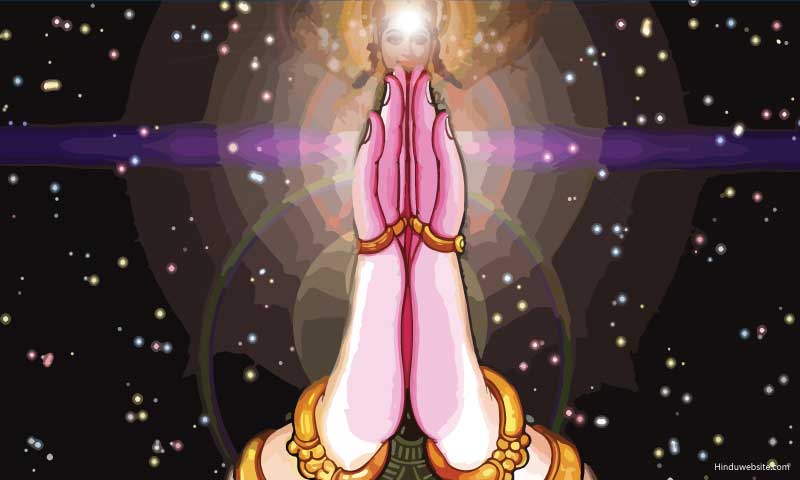
We meditate upon that adorable effulgence of the resplendent Savitr, the life giver. May he stimulate our intellects. (A prayer to Savitr. Rig Veda II.62.10)
O Lord lead me, from untruth to Truth, from darkness to Light and death to Immortality. (Brihadaranyaka Upanishad)
May good thoughts come to us from every side, pure, unobstructed, overflowing. May we, O Devas, with our ears hear what is good. Holy ones, may we see with our eyes what is good. (Rig Veda)
Prayers are central to the practice of Hinduism. They are used in both ritual and spiritual practices. Hinduism originated from prayers. In devotional worship Hindus use prayers to express their love and devotion. The tradition approves both silent and loud recitation of prayers. Prayers are used in ritual worship (yajnas) as well as in domestic worship (puja). Hindu prayers go by many names such as mantras, samans, riks, bhajans, kirtans, prarthanas, slokas, strotras, suprabhatams, anjali, ashtakams and smaranams. They are used for invocation, supplication, appeasement, propitiation, submission, expiation, and purification.
The Vedas are compilations of hymns (Rks), songs (Samans), incantations (Yajus), and fervent prayers (Udgitha) used to invoke various gods and propitiate them. Hindu prayers are however different from the prayers used in other religions in character and composition. They are sometimes specific to the intent and purpose of the worshippers and can be used both for constructive and destructive purposes. Hence, traditionally there is an element of secrecy associated with them. The following are some of the basic concepts of prayers and their ritual and spiritual importance in Hinduism:
1. In Hinduism prayers are used to invoke gods or various supernatural powers for the welfare of particular individuals or the entire community. The Vedic hymns are some of the most powerful prayers ever known to the mankind.
2. In Hindu prayers the content of the prayer as well as the sounds involved in the utterance of prayers are equally important. A great emphasis is laid on the manner and method in which the prayers are recited. If a prayer is not correctly chanted, if the syllables are not properly pronounced, the prayers may not yield desired results and may even harm the individuals.
3. The Vedic mantras are believed to possess irresistible magical power to invoke supernatural beings, provided they are chanted in a particular manner and according to a particular rhythm.
4. The prayers extol the virtues and potencies of various gods and goddesses in order to seek favors from them.
5. The Vedic mantras are often chanted loudly during public ceremonies. At the same time there are some mantras, especially the personal mantras which are meant to kept secret. The scriptures also insist that the mantras should not be revealed to those who are not spiritually qualified.
6. Traditional Hindus offer prayers to gods in the morning, in the afternoon and in the evening.
7. The Bhakti tradition made the practice of singing and dancing in the presence of God very popular. The songs sung on such occasions are deep devotional prayers.
In the spiritual realm a prayer has a greater significance. Continuous recitation of gods name (nam japam) would lead to purification of the mind and inner transformation. It is the best way to develop communion with God and realize the inner self.
Suggestions for Further Reading
- Hindu Gods - Lord Ganesha
- God and Self in Hinduism
- Goddesses of Hinduism, Their Symbolism and Significance
- Purusharthas in Hinduism
- The History, Antiquity and Chronology of Hinduism
- Ashrama Dharma in Hinduism
- Hinduism and Buddhism
- Death and Afterlife in Hinduism
- Hinduism and Divorce
- Hinduism and Adultery
- Hinduism, Food and Fasting
- The Future of Hinduism
- Good and Evil in Hinduism
- The Hindu Marriage, Past and Present
- What is Maya in Hinduism?
- The Origin and Definition of Hindu
- Hinduism and Polygamy
- Hinduism and polytheism
- Hinduism and Premarital Relationships
- God and Soul, Atma and Paramatma, in Hinduism
- About Suicides in Hinduism
- Religious Tolerance in Hinduism
- Violence and Abuse in Hinduism
- Traditional Status of Women in Hinduism
- Ashtanga Yoga of Patanjali
- About Hanuman or Anjaneya
- Hinduism and Same-sex Marriage
- Perspectives on What Karma Means
- Hinduism - The Role of Shakti in Creation
- Significance of Happiness in Hinduism
- Hindu God Lord Shiva (Siva) - the Destroyer
- The Role of Archakas, Temple Priests, in Hinduism
- Hinduism - Gods and Goddess in the Vedas
- Essays On Dharma
- Esoteric Mystic Hinduism
- Introduction to Hinduism
- Hindu Way of Life
- Essays On Karma
- Hindu Rites and Rituals
- The Origin of The Sanskrit Language
- Symbolism in Hinduism
- Essays on The Upanishads
- Concepts of Hinduism
- Essays on Atman
- Hindu Festivals
- Spiritual Practice
- Right Living
- Yoga of Sorrow
- Happiness
- Mental Health
- Concepts of Buddhism
- General Essays