
Treatment of Animals in Hinduism
Do animals have souls? Yes say the Hindu scriptures. Every living being, from the animals down to the insects and tiny organisms, possesses souls. Like humans, they are also beings (bhutas) subject to the laws of Nature and the cycle of births and deaths. We may consider them ignorant, but they have their own language and intelligence. They also perform an important duty in creation and occupy an important place in the manifestation and evolution of life. Their duty is to nourish the humans through milk and through self-sacrifice.
This article examines the importance of animals in Hinduism and how they are treated in general by various sections people. Animals occupy an important place in Hinduism. They are frequently mentioned in the Hindu myths and legends and enjoy a place of their own in Hindu pantheon as vehicles of many gods and goddesses, as divinities and also as incarnations or aspects of Vishnu or Siva. They embellish and beautify Hindu decorative art and temple architecture, adorning the outer walls and towers of temples as objects of beauty or being installed inside as objects of veneration. Animals appear in Buddhism and Jainism both as divinities and as a part of their decorative art and architecture. Before Mahayana Buddhism became popular the Buddha was depicted symbolically as an elephant. Mahavira, the founder of Jainism, is often shown under the hood of a multi headed serpent, a practice, according to some, was later followed by Vaishnavism.
Treatment of animals in Hinduism
Hinduism is a compassionate religion and treats all living beings from animals down to insects and tiny creatures with great respect as aspects of God, having souls of their own, going through the same process of births and deaths as human beings. Depending upon how they are born, they classify all living beings into three kinds: those who are born from seeds and sprouts, those who are born from eggs and those who are born from womb. The scriptures urge us to treat the animals fairly and, not harm them and not subject them to cruelty and pain. Non-violence towards all, including plants and animals is the highest virtue. Non-violence means not even having the intention to disturb others. Sacrificing animals to appease the deities was a prehistoric tradition which continued in the tradition for long, but as time went by became increasingly uncomfortable with such practices to the extent that it is no more appreciated in Hinduism by all sections of people. The historical attitude of Hindus towards animals can be guessed from the fact that until the arrival of the British into India, the Indian forests were teeming with all kinds of wildlife. It was the British who made hunting a great sport and virtually wiped out the wildlife population from the country.
The status of gods, humans, and animals in creation
According to various schools of Hinduism, spiritually there is
no distinction between human beings and other life forms. All life
forms, including plants and animals, are manifestations of God as
limited beings (jivas) and possess souls. All beings are children
of Prajapati only. There are no exceptions. God is the lord of the
animals (pasupati). All humans are also animals until they learn
to use their intelligence and overcome their ignorance and delusion.
Like humans, animals are also subject to the cycle of births and
deaths, karma, triple gunas, aspects of Nature, mortality and the
possibility of salvation. All are subject to mortality and food
for Death who rules the mortal world. Even microorganisms are jivas,
having souls of their own.1 The difference
is in terms of their physical bodies and the number of tattvas (principles),
gunas (qualities), elements (mahabhutas) and senses associated with
them. The jivas are subject to the limitations of consciousness
and capacity, induced by the activity of Prakriti or nature. When
they overcome their limitations and regain their true consciousness,
they become liberated. Saivism goes one step further and considers
all living beings as pasus (animals) in contrast to pati or Siva
who is the lord of all (pasupathi). The pasus are Siva differentiated
as individual beings subject to the bonds (pasas) of egoism, delusion
and karma. When they overcome these bonds and realize their true
consciousness they become liberated.
According to Hinduism. animals are not inferior creatures, but manifestations of God on the lower scale of evolution compared to man, each containing a spark of the divine, capable of becoming human and achieving salvation like the rest of us. Human life is precious because it comes after many lives of existence in the lower life forms. In the whole creation only human beings, not even devas (gods), have the opportunity to achieve salvation or ascend to the planes of divinity. Human life is therefore very valuable and unique. But if human beings choose to ignore the great opportunity earned by them through their previous karma and indulge in irresponsible actions, they may very likely regress into animal existence and have to start all over again. We have therefore a special responsibility to practice dharma and work for our liberation.
Animal Welfare
Hinduism upholds all acts of kindness. Since Hinduism recognizes all animals as beings with souls, it has been a tradition in Hinduism since the earliest times to protect them and nourish them. Nourishing the animals along with gods and ancestors has been a traditional practice and part of the five daily sacrifices of Hindu tradition. Just as humans depend upon gods for their protection, the animals depend upon humans for their welfare. Just as we nourish gods through sacrifices, animals nourish humans through milk and their flesh. Killing animals except for rituals or for food was a taboo. Even in case of the latter, the law books prescribed many restrictions. Hindus consider compassion for animals (bhuta daya) one of the highest virtues and mark of divine quality. It has been a tradition in Hinduism since long not to slaughter cattle that are past their prime. Even if they serve no purpose, they are allowed to die naturally. Hindus (who practice their religion, not the namesake Hindus) care for sick cattle and take are of their welfare. iItentionally they do not harm animals, because they know the consequences of such bad karma.
Animal Science
In ancient India people used various types of animals for domestic, military, commercial, recreational or medicinal purposes. Hindu scriptures mention the use of cows, sheep, oxen, buffaloes, rhinoceros, camels, asses, elephants, birds, boars, pigs, dogs, snakes, fish, tigers, lions and many mythical creatures. Animals were used in trade and commerce, hunting, animal fights, gambling, defense, transportation, sacrificial ceremonies, medicines and as gifts and food. Snakes or snake poison were used to kill enemies or even kings. Animal science (pashu vidya) dealt with various aspects of animal life and how to tame them, train them and use them for domestic or military use. There were separate treatises on taming and training elephants. Animals were classified into groups based on their origin (oviparous or mammalian), anatomy, number of legs, number of sense organs, diet, behavior, dominant quality (guna), habitat and so on.
People believed that animals had the ability to communicate in their cryptic languages and that gods had the natural ability to communicate with them while human beings needed to develop psychic ability to do so. In the Hindu mythology we find animals trying to acquire spiritual knowledge from enlightened masters by loitering around them and listening to their discourses. Animals such as cows, lizards, crows, cats, vultures and owls were used to read signs and portend future or determine auspicious and inauspicious moments. There was a whole branch of science dealing with the medicinal value of certain animal parts and products.
The Animal Within and Without
In ancient India ascetics and religious teachers lived in forests surrounded by wild life, practicing tapas (austerities) or teaching students in the gurukulas (religious schools). The adverse and difficult conditions in the forests offered them an opportunity to practice the virtues of detachment, humility, equanimity and compassion. Living in harmony with nature, carrying no weapons and embracing the insecurity and fear they tried to tame and transcend their animal nature and achieve liberation.
Animals in History
Excavations at the Indus valley sites show that animals played an important role in the religious and economic lives of the Indus people. The Indus people domesticated cows, buffaloes, sheep and bulls and probably worshipped animals along with mother goddess and a prototype of Lord Siva who is depicted in the seals as a yogi seated in a meditative pose surrounded by animals. Unfortunately the Indus seals have not been deciphered so far. So we do not know much about what the Indus people did or how they lived.
Vedic people valued cattle as wealth and preferred to receive them as gifts. The scriptures repeatedly emphasize the virtue of donating cows to Brahimins on every opportunity. But they were not much into worshipping animal divinities. They used animals for milk, ghee (clarified butter), leather, medicine, barter, gifts, cooking and sacrifices. The early vedic people sacrificed cows, sheep, oxen, buffaloes and horses 2. They protected their farmlands from birds, pests and insects and hunted animals both for recreation and protection of their villages and cattle. They tanned the hides of animals and used the leather to make bags, reigns, slings and bowstrings. Animals were also used for meat. Cooking was considered an art. Both Bhima and Nala excelled in the art of cooking. As time went by, sacrificial ceremonies became increasingly symbolic with the exception of horse sacrifice. Cows became sacred animals which cannot be killed both for religious and economic reasons. Killing cows became a social taboo and a capital offence.
Hunting
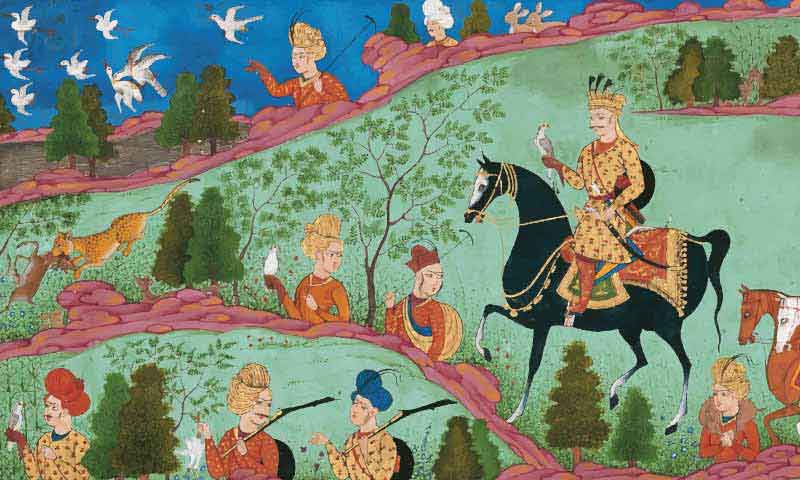
Animal fights were a regular feature in the post vedic India. People participated in animal fights for betting and recreation. Hunting was a regular sport in which the kings and his family participated. Hunting provided them with a good opportunity to perfect their skills in archery, chariot racing and marital arts, get acquainted with the conditions of the region and clear the forests of wild animals which menaced the people living there. Accompanied by an entourage of soldiers, officials, ministers and entertainers, they went out on hunting expeditions either to kill or capture wild animals such as lions, tigers, bears, elephants, wild boar, deer and wild bulls. On occasions they visited the ascetics who lived near by and engaged them in spiritual conversation.
Use of Animals in Warfare
Elephants and horses constituted a significant part of a king's military might, which were replenished regularly through hunting and conquests. The Greek historians accounted 4000 horses, 300 chariots and 200 elephants in the army of Porus who ruled a small principality in the Punjab region. The Nandas and Mauryans who ruled vast empires maintained huge armies consisting of hundreds of thousands of bulls, bullocks, horses and elephants. Chandragupta Maurya sent a gift of several hundred elephants to Selukas who was appointed by Alexander as the viceroy of the territories he conquered east of Hindukush. Animals were used in military either for warfare or in transportation.
Hindu law books declare that it was king's responsibility to
protect his people from wild animals and pestilence. According to
Kautilya's Arthashastra, a king should protect his territory from
eight kinds of adversities namely, fire, flood, pestilence, famine,
rats, snakes, tigers and demons. He should create separate departments
to manage the forest and cattle wealth of his kingdom. Megasthanese,
who was an ambassador in the court of Chandragupta Maurya, mentioned
in his Indika that the Mauryan King went on hunting expeditions
on the back of an elephant surrounded by women bodyguards. The king
was fond of animals and enjoyed animal fights involving bulls, rams,
elephants and other animals. Bullock carts were used in the transportation
of food and other materials to the soldiers during war time. People
used various types of animals for riding including horses, camels,
asses, elephants and tigers. Shepherds and cowherds lived in open
in tents. In post Mauryan period there were professional guilds
of hunters, snake charmers, bird catchers and pig dealers. The growing
popularity of Jainism, Buddhism, Saivism and Vaishnavism created
a new awareness among people about animals and the need for compassion
towards them.
Animal Sacrifices
But their influence was not sufficient enough to stop animal sacrifices. Ancient Indians regularly indulged in animal sacrifices and rarely in human sacrifices. In some remote areas of India animal sacrifices continue even today. The raise of Tantricism in the post Mauryan period and the integration of folk religions into Hinduism contributed to the rise animal sacrifices. Kings sacrificed animals to appease divinities seeking their blessings and support. Inscriptions belonging to the Gutpa period suggest that people had an obligation to supply sacrificial animals on demand to their king. Sometimes the kings exempted some villages from this obligation. Sri Adishanakaracharya disapproved extreme methods of tantric worship which included animal and human sacrifices. During his travels in the subcontinent, he encouraged the worship of shaktis through the traditional methods of rituals and puja rather than sacrifices and offerings of blood and flesh.
Animal as Divinities
Hindus revere many divinities in animal form. Lord Vishnu incarnated upon earth first as a fish, then as a tortoise and next as a boar. In another incarnation he appeared as half lion and half man. He is worshipped in all these forms. Lord Siva appeared once in the form of a sharabha a mythical monster with multiple horns, legs and spikes instead of hair on the body. Hanuman is a monkey god who assisted Lord Rama ably in the battle of Ramayana. He is worshipped through out India and, though of a lesser god, ranks among the foremost in the Hindu pantheon. Ganesha the elephant headed god and son of Lord Siva and Parvathi is equally popular, if not more.
Adishesha is a thousand hooded primeval serpent associated with Lord Vishnu, who arises from the primeval waters (ksiramudra) in the beginning of creation resting on his endless coils, his thousand hoods providing him the canopy. The serpent symbolically represents the time and the thousand hoods divisions of time.
Besides Hanuman, animals played an important role in the epic
battle of Ramayana. Jatayuvu, a mythical bird, loses his life fighting
against Ravana when he is carrying away Sita after kidnapping her.
During his wanderings in search of Sita, accompanied by his brother
Lakshman, Rama comes across Sugriva, the monkey king of Kishkindha
whom he helps against his brother Bali. Jatayuvu's brother provides
a clue to the search party of monkeys headed by Hanuman that Sita
was held in captive by the demon king Ravana. Then accompanied by
an army of monkeys, bears and other animals Rama leaves for Lanka
to rescue his wailing wife. The monkeys and other animals build
an incredible bridge across the ocean to the island country of Ravana.
They destroy the vast army of Ravana and help Rama in rescuing his
wife. The story of Ramayana is a reminder of the Hindu belief that
in the universal scheme of things God does not distinguish between
humans and animals and that all living beings have an equal status
but play different roles.
Animals as Vehicles of Gods
In the Hindu pantheon each god and goddess is associated with an animal as a vehicle. Symbolically the vehicles represent the animal energies or qualities or skills which need to be strengthened or sublimated in our lower nature with the help of the divinities who can transform them. The knowledge of vehicles is therefore very useful in knowing which divinity can help us in transforming our inner energies. The list of gods and goddesses and their vehicles are mentioned below:
| Divinity | Vehicle |
| Ganesha | Mouse |
| Brahma | Swan |
| Vishnu | Garuda or eagle |
| Siva | Nandi or bull |
| Indra | Elephant Airavatha |
| Agni | Ram |
| Vayu | Thousands of horses, antelope, lion. |
| Varuna | Swans, crocodile or makara |
| The Sun | A chariot driven by seven horses |
| Skanda | Peacock |
| Saraswathi | Peacock or swan |
| Lakshmi | Owl |
| Parvathi/ Durga / Chandi |
Lion |
| Maheswari | Bull |
| Vaisnavi | Eagle |
| Kaumari | Peacock |
| Brahmi | Swan |
| Aindri | Elephant |
| Kama | Parrot, Cuckoo or Swan |
| Soma | A two or three wheeled chariot drawn by ten horses |
| Mangala | Ram |
| Budha | A chariot drawn by four horses |
| Brihaspathi | Golden chariot drawn by eight horses |
| Sukra | Eight horses |
| Sani | Vulture, crow, buffalo or an iron chariot drawn by eight horses, |
| Rahu | Black lion |
| Ketu | Vulture |
| Kubera | Shoulders of a man or a carriage drawn by men or an elephant or ram, |
| Yama | He buffalo |
| Nritti | Donkey, lion, man |
| Ishana | Bull |
| Ganga | Crocodile |
Animals as Symbols
Animals serve as symbols in Hinduism. We have already discussed the symbolic significance of animals as vehicles of gods and goddesses. The elephant is used as a religious symbol by the Hindus, the Buddhists and the Jains. The symbol of ashta diggajas or eight elephants standing in eight different directions represent the ashtadikpalas or rulers of the eight directions of space. The elephants are also associated with goddess Lakshmi as symbols of abundance. The fish and conch shell are associated with Lord Vishnu. The conch is an attribute of Lord Vishnu while two fish juxtaposed to each other is considered as a symbol of fertility and good luck. Makara, a mythical figure, with the head of a crocodile, body of a reptile and tail of foliage, is a symbol of the zodiacal sign of Capricorn. It is also depicted as the vehicle of the river goddess Ganga. In northern India the lion, bull and elephant are included among the ashtamangalas or the eight auspicious objects.
Animals as Source of Food
Meat eating was not forbidden in ancient India. The Vedic people ate cooked meats of certain animals. Meat was also cooked and consumed at the end of certain sacrificial ceremonies such as the horse sacrifice. Vedic people ate fish, buffaloes, oxen and various other animals. Cows were often sacrificed but they were subsequently banned from slaughter. Jainism exercised a great influence in changing the food habits of the people of the subcontinent. The Jain monks lived austere lives and encouraged people to avoid animal food. Many ancient rulers of India were Jains including Chandragupta Maurya which must have contributed greatly to the increasing preference among urban people for vegetarian food. Although Buddhism emphasized the virtues of compassion and non injury to animals, meat eating was not disallowed by Buddhism altogether. The monastic rules of Buddhism provided a code of conduct for the monks to follow in choosing vegetarian and non-vegetarian foods of various types without craving. Asoka introduced his law of piety (dhamma), which was a mixture of Vedism, Jainism and Buddhism, in which he emphasized the need for compassion and respect for animal life. He also banned animal fights and made provision for animal care.
The post Mauryan period saw a revival of Hinduism. The Sungas, the Nagas, the Guptas and the Vakatakas, who ruled large parts of India patronized Hinduism and revived many ancient traditions. They participated in vedic sacrifices, worshipped Hindu gods and goddesses and built temples in their honor. The Dharmashastras prescribed elaborate rulers regarding food and drinks. The Apastamba Sutras forbid meats of certain animals such as the one hoofed animals, camels, certain birds, fish, deer, village pigs and cattle, but allowed the meat of cows and oxen, tortoise, porcupine, hedgehog, the rhinoceros and the hare were allowed 3. The Guatama sutras forbid meat of animals that had five toes, or double rows of teeth or excessive quantity of hair, but exempted the meat of hedgehog, hare, porcupine, the iguana, the rhinoceros and the tortoise. Certain animal parts such as the testicles of bulls and the meat of rhinoceros were used as aphrodisiacs.
Serpent Deities
The worship of snakes has been a very ancient tradition in India. The vedic people did not worship snakes. But many native people across the length and breadth of the subcontinent worshipped them. Some of the tribes became popular as Nagas because of their association with serpent deities. In the urban settlements snake worshippers worked as snake charmers and medicine men. They entertained people with magic and cured snake bites using a combination of prayers and medicine.
Between First century BC and second century AD, a group of Nagas claiming themselves to be Barasivas rose to prominence in central India. They established an empire that stretched from Jabalpur in the south to Mathura in the north. They contributed to the downfall of the Kushana empire and freed parts of northern India from foreign rule. They revived many vedic traditions including the horse sacrifice and played an important role in the reemergence of Saivism in the Gangetic valley and central India in the face of growing popularity of Buddhism. Their contribution to Hinduism is perhaps never fully appreciated as they left no monuments of their own. The Puranas mention names of several Naga rulers who ruled central and northern India. The Nagas initiated a process of revival of Hinduism that was later taken up by the Satavahanas in the south and the Gutpas and the Vakatakas in the north. As pointed out by Dr.Jaiswal 4, had there been no Nagas perhaps there would have been no Gutpas.
According to Hindu mythology, the the serpent deities are semi-divine beings who descended from sage Kashyapa and Kadru. They live in the subterranean world of Nagaloka ruled by Ananta with Bhogavathi as its capital. They act as guardians of subterranean treasures such as gems, precious stones and minerals. Known for their quick temper, wisdom, skill and magical powers, they are depicted in Hindu iconography with a lower snake body covered by bejeweled garments and a human head adorned by three to seven cobra hoods. The snake deities are charming personalities, who can bewitch human beings with their grace and beauty. Garuda, the celestial bird and vehicle of Vishnu, is their cousin with whom they have an eternal enmity.
In certain parts of southern India, the serpent deities are associated with fertility and tree worship. Women, desiring offspring, worship snake stones having the images of a snake goddess carrying two offspring in her arms. The stones are installed under either a pipal or a neem tree after keeping them submerged under water for six months and worshipped with flowers and vermilion.
Prominent serpent deities include Ananta, Kaliya and Vasuki. Ananta is the king of the serpent world. Kaliya was a five headed serpent who was subdued by Lord Krishna after a prolonged fight. Vasuki was a giant serpent who helped both gods and demons in the churning of the oceans for the nectar of immortality.
The serpent deities constitute an important aspect of Hinduism even today. Devout men and women in the rural areas of both northern and southern India worship them with milk, incense and flowers, seeking their help and grace. In some parts of the country killing a snake is a bad karma and a bad omen. People avoid killing cobras because of the belief that they can recognize their attackers and take revenge. If a snake, or a cobra, is killed by an accident, it is customary to perform certain rites before cremating or burying it to avoid retribution from the serpent deities.
Horses
The horse was not indigenous to India. It was either imported from outside by the Indus valley people or came along with the Rigvedic people. In the early vedic period horses and chariots were used mainly for transportation but in the later vedic period they became an integral part of the army. Horses were also used in sacrificial ceremonies such as horse sacrifice.
According to the vedic mythology, horses originated from Ucchaishravas a mythical horse that was white in color and had wings. It emerged out of waters during the churning of the oceans by gods and demon and was taken by Indra, the leader of the gods, who cut its wings in order to restrict its movements and donated it to the mankind for their welfare and convenience.
The horse played an important role in the formation of large empires by facilitating efficient and effective functioning of the administrative machinery in consolidating the monarchies and ensuring better control in collecting taxes, mobilizing large armies and maintaining hold over border areas that were often the centers of rebellion.
Ancient Indian rulers made adequate arrangements for the maintenance and procurement of horses. The Mauryan rulers had separate department for this purpose. Horses were used both for transportation and warfare but rarely in agriculture. They were drawn by reins as saddles were unknown in ancient India. During war time they were given fermented drinks before taking them to the battle field.
Cows
Cows occupy an important place in Hinduism. Hindus consider killing cows and eating their meat a serious taboo. Every part of a cow's body is said to be occupied by a divinity and everything it produces is considered sacred including the cow dung and urine which are used in certain rites and rituals. Cows are worshipped on certain occasions. Hindus do not appreciate the idea of sending old cows to slaughter house. Certain charitable Hindu trusts maintain cow pens to keep old cows and look after them till they die naturally. Though India is a secular country where the government does not interfere in the religious affairs of the people, no political party would like to hurt the sentiments of Hindus by making any adverse statements on the cows or passing laws permitting their slaughter. It is no exaggeration to say that if cows have a mind of their own, perhaps they all would like to migrate to India and make it their permanent home!
The cows were considered sacred from the early Rigvedic period. The Vedas expressly prohibit the killing of cows either for religious or secular purposes. Vedic people regarded cows as wealth and demanded them as donation from the rulers and merchants in return for their priestly services. Cows were used in barter and as dowry. Cow products such as cow dung, cow milk and ghee were used in ceremonies and medicines. During the Gupta rule, cow slaughter became a capital offence and remained so for a long time under successive generations of Hindu rulers.
According to Hindu mythology, the cows were created along with Brahma, the creator. Kamadhenu and Surabhi were considered sacred cows that emerged from the churning of the oceans. They had the ability to grant any wish to their owners. Cows played an important role in the life of Lord Krishna who spent most of his childhood in the midst of cowherds tending the cows. His flute had a soothing effect on the cows causing them to produce more milk. Goloka or the land of cows is another name for Vaikuntha the world of Vishnu.
Dog
The dog is associated with Indra, Yama and Siva. Indra had a bitch by name Sarama whose progeny became the watchdogs of Yamaloka the nether world of Lord Yama. In the epic Mahabharata there is a story in which Lord Yama accompanies the Pandavas all the way to the paradise in the guise of a dog to test the wisdom of Dharmaraj, his god son and the eldest brother of the Pandavas. The dog is also associated with Lord Siva who is known as svapathi or the lord of the dogs. Bhairava a fierce form of Siva, has a dog as an attendant. Khanoba, an aspect of Siva, who is worshipped in Maharashtra, had a dog as his vehcile. Lord Dattatreya who is a personification of the Brahma, Vishnu and Siva is always accompanied by four dogs who symbolize the four Vedas.
Suggestions for Further Reading
- The History, Practice, Benefits and Types of Yoga
- Anjaneya Devotee of Lord Rama
- Bhakti, Spiritual Devotion To God
- Bhakti, Spiritual Devotion To God
- Ascetic Traditions and Practices in Hinduism
- Creation in Hinduism As a Transformative Evolutionary Process
- Devotion and Meditation in Hinduism
- Why is Hinduism Called Sanatana Dharma?
- Do You Have Any Plans For Your Rebirth or Reincarnation?
- Lessons from the Dance of Kali, the Mother Nature
- Letting your God live in You - The True Essence of the Hindu Way of Life
- The Eternal and Temporal Aspects of Hinduism
- Page Redirect to History of Sanskrit
- Self-knowledge, Difficulties in Knowing Yourself
- Hinduism - Sex and Gurus
- A Critical Study of the Chronology of Siddhas
- The Origin and Significance of the Epic Mahabharata
- The True Meaning of Prakriti in Hinduism
- Essays On Dharma
- Esoteric Mystic Hinduism
- Introduction to Hinduism
- Hindu Way of Life
- Essays On Karma
- Hindu Rites and Rituals
- The Origin of The Sanskrit Language
- Symbolism in Hinduism
- Essays on The Upanishads
- Concepts of Hinduism
- Essays on Atman
- Hindu Festivals
- Spiritual Practice
- Right Living
- Yoga of Sorrow
- Happiness
- Mental Health
- Concepts of Buddhism
- General Essays
Reference
1. Jainism goes one step beyond and declares that both animate and inanimate objects have souls.
2. This is based on literary evidence found in the hymns of the Vedas. But we do not know for certain whether they actually sacrificed cows.
3. Apastamba Sutras, Prasna 1, Patala 5, Khanda 17
4. Jayasvwal K.P., History of India (150AD to 350 AD)