
Welfare of the Buddhist Sangha
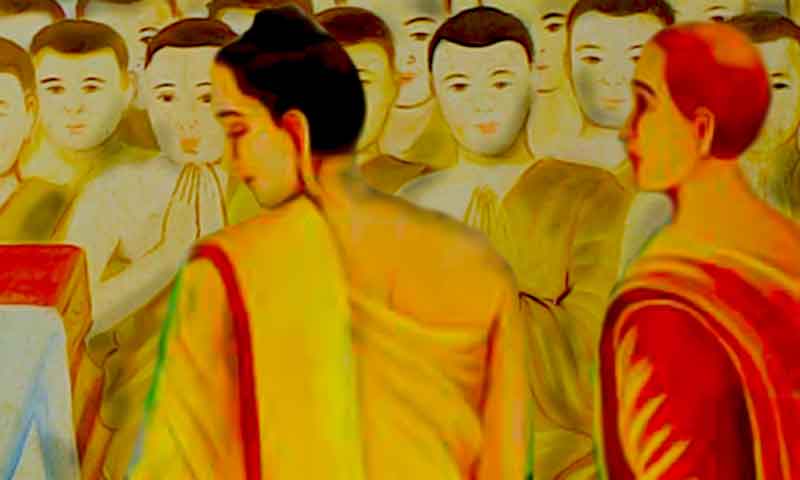
In the seventy ninth year of his life, when the Buddha knew that the end of his corporeal existence was approaching, he made a pronouncement declaring the conditions that were ideal for the survival and welfare of the Buddhist Order.
These injunctions were meant to ensure that the monks in his absence would not deviate from the Eightfold path and degenerate into heretics. He knew that the welfare of each monk and the future of his teachings depended entirely upon the functioning of the Order and its ability to maintain strict discipline among the followers. These instructions therefore carry a great relevance for the followers of the Buddha even today.
Some of these instructions are enumerated below:
The monks:
1. Shall not delight in solitude.
2. Shall not engage themselves, take interest in or connected with any business.
3. Shall not stop on their way to Nirvana because they have attained some lesser success.
4. Shall exercise themselves in mental activity , search after truth, energy, joy, peace, earnest contemplation, and equanimity of mind.
5. Shall engage themselves in the realization of the transient nature of all phenomenal things, whether mental or physical and the absence of soul.
6. Shall spend their time, both in private and in public in the company of Arhats, practising the virtues that lead to liberation and are approved by the wise, performing outward duties without the impurity of any desire for either the future life or the faith.
7. Shall spend their time, both in private and in public, in the company of Arhats, cherishing the noble wisdom that leads to complete destruction of their sorrow.
Suggestions for Further Reading
- The bhikkhus' code of discipline.
- Dhamma vinaya - Lists of summaries of training rules for the monks
- The Buddha's method of teaching the Dhamma
- Lay Buddhist Practice
- The Bhikkhus' Rules A Guide for Lay people
- The bhikkhus' code of discipline.
- The economy of gifts - code for the Buddhist monks
- Duties of the Sangha
- Going Forth A Call to Buddhist Monkhood
- Food for the Heart, Talks on the Dhamma practice
- Buddhism - The Concept of Anatta or No Self
- Anatta or Anatma in Buddhism
- Anicca or Anitya in Buddhism
- The Buddha on God
- The Buddha on Avijja or Ignorance and on the Origin of Life
- The Buddha On the Self And Anatta, the Not-Self
- History Of The Four Buddhist Councils
- Chinese Buddhism
- The Eightfold Path Of Buddhism
- The Four Noble Truths of Buddhism
- Four Stages of Progress on the Middle Way in Buddhism
- The Practice of Friendliness, Kalyanamittata, in Buddhism
- Karma or Kamma In Buddhism
- Mahayana Buddhism
- Buddha's Last Days and Final Words
- Buddhism - The Middle Way
- The Buddha's Teaching on Right Mindfulness
- The Meaning and Practice of Mindfulness
- Buddhism - Vinaya or Monastic Discipline
- Right Conduct For Lay Buddhists
- Nirvana or Nibbana in Buddhism
- Buddhism - Objects of Meditation and Subjects for Meditation
- Buddhism - Right Speech and Mind Training
- Buddhism - Right Living On The Eightfold Path
- Handbook for the Relief of Suffering by Ajaan Lee
- Theravada Buddhism
- Meat Eating or Vegetarianism in Buddhism
- Essays On Dharma
- Esoteric Mystic Hinduism
- Introduction to Hinduism
- Hindu Way of Life
- Essays On Karma
- Hindu Rites and Rituals
- The Origin of The Sanskrit Language
- Symbolism in Hinduism
- Essays on The Upanishads
- Concepts of Hinduism
- Essays on Atman
- Hindu Festivals
- Spiritual Practice
- Right Living
- Yoga of Sorrow
- Happiness
- Mental Health
- Concepts of Buddhism
- General Essays